Shopify merchants processed over $115 billion in gross merchandise volume (GMV) during the second quarter of 2026, up 32% year over year, according to Shopify’s quarterly report.
That’s a lot of sales. But for online sellers, getting customers to click “Buy” is only part of the job.
What happens after the order comes in? Who finds the products, packs the boxes, and makes sure everything reaches the right customer?
That’s where ecommerce fulfillment comes in.
Here’s what it means, how it works, and when it might make sense to hand the work over to someone else.
What Does Fulfillment Mean in Ecommerce?
Order fulfillment is the process of receiving, preparing, and shipping customer orders. It begins when an order is placed and continues through the steps needed to get the purchased items to the customer.
Say you run a Shopify store selling skincare products.
A customer orders a cleanser and moisturizer. Someone needs to prepare the correct products, package them safely, and arrange delivery.
That’s order fulfillment in practice.
Much of fulfillment happens behind the scenes, from managing stock to handling unexpected order issues. Customers may not see that work, but they’ll notice when something goes wrong.
A missing item, damaged product, or delayed delivery can quickly turn a sale into a customer service problem.
Fulfillment also affects your operating costs. Storage, packaging, handling, and shipping all contribute to how much you spend getting each order to its destination.
As your store grows, keeping orders accurate, costs manageable, and customers informed becomes increasingly important.
How Does the Order Fulfillment Process Work?
Fulfillment doesn’t start with a shipping label. For businesses that hold stock, inventory needs to be ready before customers place their orders.
The process typically involves five stages, although the details vary depending on how a store operates.
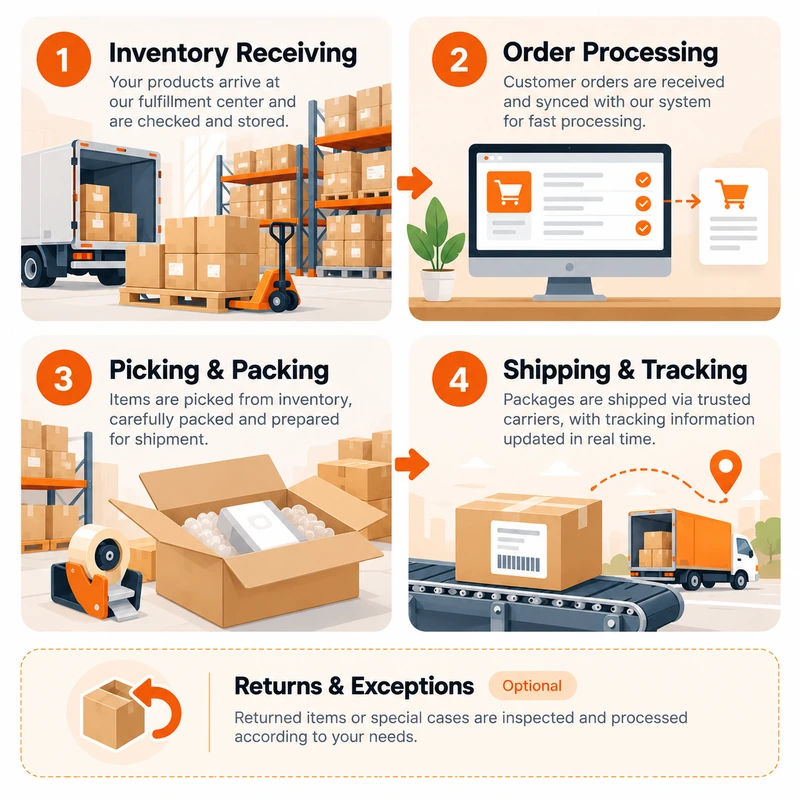
1. Receiving and Storing Inventory
When products arrive from a supplier, they’re checked against the purchase order, counted, and recorded in the inventory system.
Each item needs an identifiable storage location. SKUs help distinguish similar products, such as different sizes, colors, or variations.
Accurate stock records matter here. If your store shows an item as available when it’s actually out of stock, you may end up accepting an order you can’t fulfill.
In dropshipping, the supplier usually manages this inventory instead of the store owner.
2. Receiving and Processing Orders
Once an order comes in, the first task is to make sure it can be fulfilled.
This means confirming product availability, quantities, shipping details, and any special instructions.
If something doesn’t match, such as an unavailable variation or incomplete address, the issue should be resolved before the order moves forward.
3. Picking and Packing
The fulfillment team locates the ordered items and checks that the correct products and quantities have been selected.
Packaging then needs to suit the products. Clothing may only need a protective mailer, while fragile skincare bottles may require cushioning and a sturdier box.
Before the parcel is sealed, a final check helps catch missing or incorrect items.
Approved branded boxes, inserts, or other packaging materials can also be added at this stage.
4. Shipping and Tracking
After packing, the parcel is labeled and handed over to the carrier.
The tracking number is usually added to the order record and shared with the customer when available.
It’s important to distinguish between an order being shipped and actually being delivered. A parcel may still be in transit, delayed, or awaiting a delivery attempt.
Keeping order statuses updated makes it easier to respond when customers ask where their packages are.
5. Managing Returns and Delivery Issues
Not every order ends with a successful delivery. Some parcels are delayed, damaged, or returned, and these situations require additional follow-up.
A package might arrive damaged, get lost in transit, or be returned because the address was incorrect.
When this happens, the seller needs to know who will investigate, whether a replacement or refund is required, and how the customer will be updated.
Clear responsibilities between the store, supplier, and fulfillment provider help prevent these issues from becoming prolonged customer service problems.
Fulfillment vs. Shipping: What’s the Difference?
Fulfillment and shipping are often mentioned together, but they cover different parts of an ecommerce order.
Fulfillment involves managing the work needed to process and prepare an order, including inventory handling, picking, packing, and dispatch.
Shipping refers more specifically to transporting the parcel from its point of origin to the customer.
Why does the difference matter?
When choosing a service provider, don’t assume shipping and fulfillment services include the same things. A shipping company may only handle transportation, while a fulfillment provider may also offer storage, order processing, and packaging.
Check what’s included before comparing prices or committing to a service.
Who Handles Ecommerce Fulfillment?
Managing all these steps yourself can work at first, but it isn’t the only option. And as your store grows, managing everything yourself can become more challenging.
But you don’t necessarily have to handle it all on your own.
Some businesses manage fulfillment in-house, while others work with suppliers or third-party logistics providers (3PLs). Each approach comes with different costs, responsibilities, and levels of control.
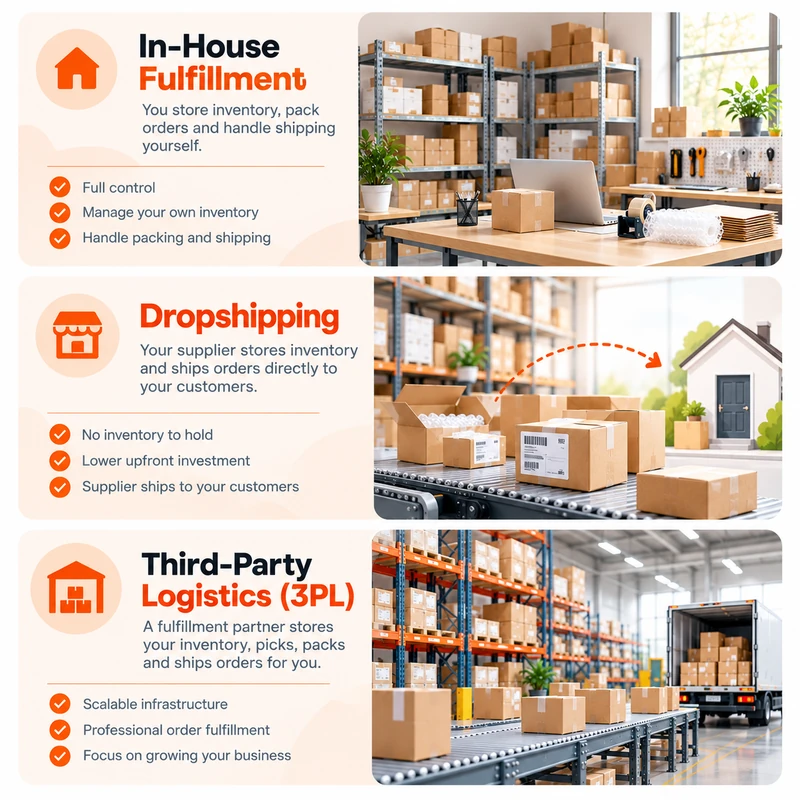
In-House Fulfillment
With in-house fulfillment, you store inventory and manage orders yourself or with your own team.
This gives you direct control over packaging, shipping, and stock handling. It can work well when you’re starting small and have enough space to manage your products.
But as orders increase, packing boxes, managing inventory, and arranging shipments can take up more time.
Dropshipping
Dropshipping works differently. When a customer buys from your store, the supplier prepares and ships the product directly to them.
You don’t need to keep the products in your own storage space, which can reduce the need to purchase and hold inventory upfront.
The trade-off is that you have less direct control over stock availability, packaging, and shipping. You’ll need to rely on your supplier to handle orders correctly.
Third-Party Logistics (3PL)
A third-party logistics provider stores your inventory and handles order fulfillment on your behalf.
You typically send products to the provider’s warehouse, where they’re stored until customer orders come in. The fulfillment team then picks, packs, and ships those orders.
This can be useful when order volumes grow or you no longer want to manage daily warehouse operations.
However, you’ll need to consider storage fees, fulfillment charges, and how well the provider can support your products and shipping requirements.
Some stores also combine fulfillment methods. For example, they may use dropshipping to test new products while keeping popular items in stock with a fulfillment provider.
When Should You Outsource Fulfillment?
There’s no fixed number of orders that tells you when it’s time to outsource fulfillment. What matters more is whether your current setup can keep up with your business.
If packing orders takes too much time, inventory becomes difficult to manage, or you’re planning to ship to new markets, working with a fulfillment partner may be worth considering.
Before making the switch, compare the total costs and check how each provider handles inventory, packaging, shipping updates, and returns.
Outsourcing isn’t always necessary. The right decision depends on your order volume, budget, and how much control you want to keep over daily operations.
Final Thoughts
Good fulfillment isn’t just about getting orders out the door. It’s about delivering the right products, managing costs, and keeping customers informed along the way.
Whether you fulfill orders yourself or work with a partner, choose an approach that fits your products, order volume, and plans for growth.
If you’re exploring your next fulfillment setup, GoShipFulfil can help you review sourcing, packaging, and shipping requirements to find a practical approach for your store.
Frequently Asked Questions
What Does Fulfilled Mean on Shopify?
On Shopify, Fulfilled generally means that all items in an order requiring fulfillment have been marked as fulfilled. For shipped orders, this usually means the items have been dispatched.
However, Fulfilled doesn’t necessarily mean Delivered. The package may still be in transit, so check its tracking information to confirm the delivery status.
Can One Order Be Fulfilled in Multiple Shipments?
Yes. An order can be split into multiple shipments if items are stored in different locations, some products are out of stock, or certain items need to be shipped separately.
For example, if a customer orders three products but only two are ready, you may ship the available items first and fulfill the remaining product later.
How Long Does Order Fulfillment Take?
Fulfillment time depends on stock availability, order volume, packaging requirements, and the fulfillment method.
Some in-stock orders may be prepared quickly, while products requiring sourcing, customization, or replenishment can take longer.
Remember that fulfillment time and shipping time are different. The time needed to prepare an order should be considered separately from the carrier’s delivery estimate.
What Costs Are Included in Ecommerce Fulfillment?
Fulfillment costs vary depending on how orders are handled.
For businesses using a 3PL, common charges may include inventory storage, picking and packing, packaging materials, and shipping. Some providers also charge for receiving inventory, returns, or special handling.
Before comparing quotes, ask for a breakdown of all applicable fees rather than looking only at the shipping price.