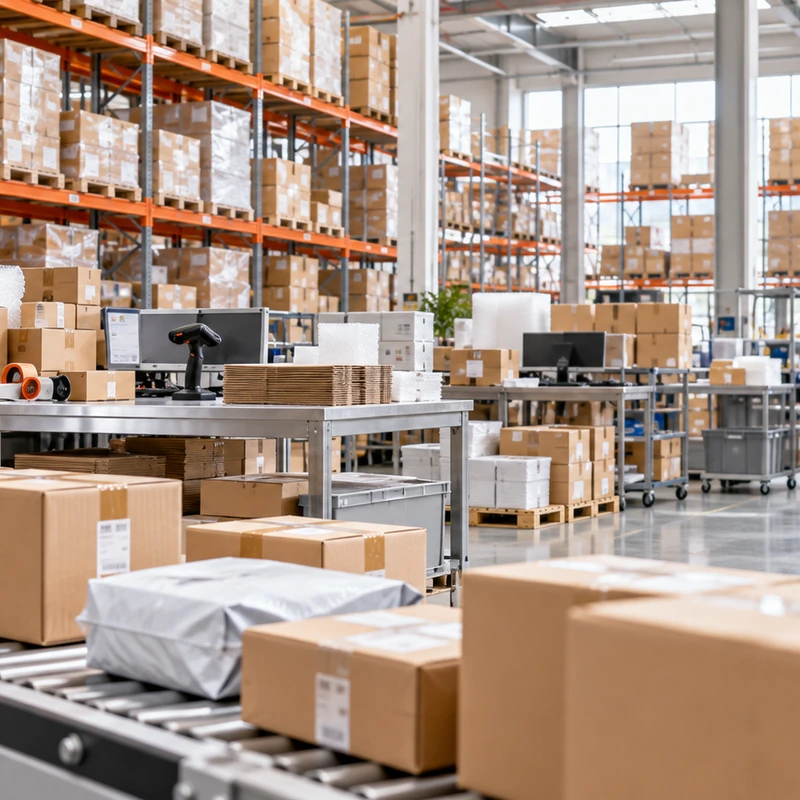
Packing orders yourself may work when your ecommerce store is small. As sales grow, however, storing inventory, packing parcels, managing shipments, and keeping track of orders can become a much larger part of daily operations.
That is where 3PL ecommerce fulfillment comes in.
A third-party logistics provider takes over selected fulfillment tasks for an ecommerce business. Understanding what a 3PL actually handles—and when outsourcing makes sense—can help you decide whether it fits your next stage of growth.
What Is 3PL Ecommerce Fulfillment?
3PL stands for third-party logistics.
In ecommerce, 3PL fulfillment generally means outsourcing activities such as inventory storage, order picking, packing, shipping, and sometimes returns to an external logistics provider.
Instead of storing products and fulfilling every order yourself, inventory is sent to a fulfillment location. When a customer places an order, the 3PL prepares the parcel according to the agreed process and arranges it for shipment.
Depending on the provider, services may include:
- Receiving and storing inventory
- Inventory management
- Picking and packing orders
- Shipping preparation
- Order tracking
- Returns processing
- Kitting or custom packing requirements
Not every 3PL provides the same services, so sellers should confirm the exact scope before choosing a partner.
How Does 3PL Ecommerce Fulfillment Work?
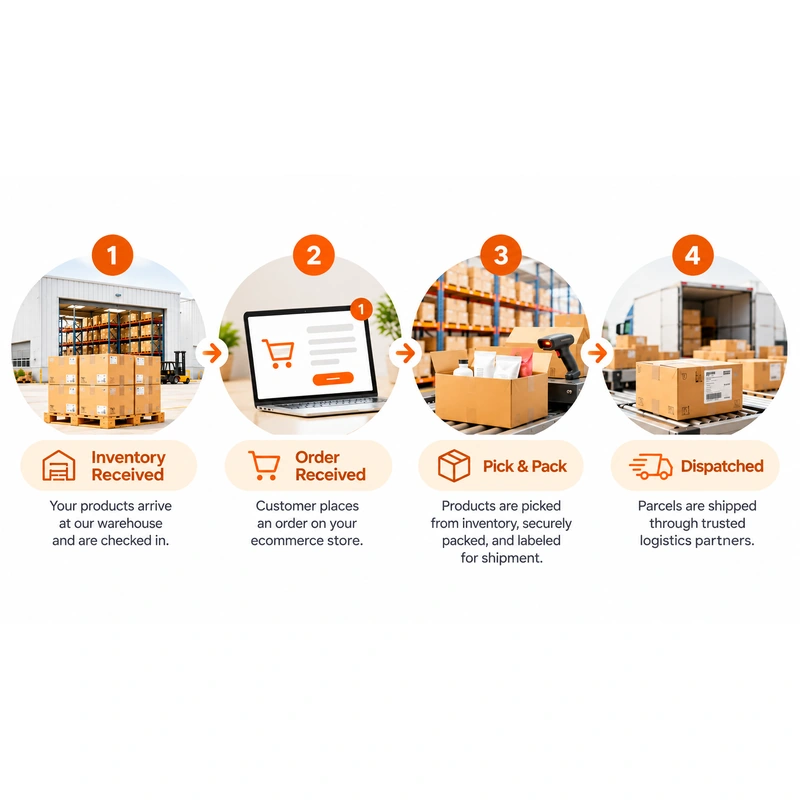
Although individual processes vary, ecommerce 3PL fulfillment usually follows a few core stages.
1. Inventory Is Received
Products are sent to the fulfillment location and recorded as inventory.
The provider organizes the stock so individual SKUs can be located when orders arrive.
At this stage, sellers should understand how receiving, inventory records, storage, and stock discrepancies are handled.
2. Orders Reach the Fulfillment Operation
When a customer buys from your online store, the fulfillment provider needs the information required to process that order.
How this happens depends on the provider and the systems involved. Some 3PLs offer ecommerce platform integrations, while others may use different order management workflows.
If you sell through Shopify or another platform, confirm compatibility and the actual order-transfer process before signing an agreement.
3. Products Are Picked and Packed
The correct products are retrieved from inventory and prepared for shipment.
Packing requirements can vary considerably between ecommerce brands. Some businesses only need standard packaging, while others may require specific boxes, labels, inserts, bundles, or other packing instructions.
These requirements should be agreed in advance.
4. Orders Are Dispatched
Once the parcel is ready, it moves into the agreed shipping process.
Tracking information may then be provided so shipment progress can be followed after dispatch.
This is also where sellers should understand how delivery exceptions, lost parcels, or other shipping problems are handled.
3PL vs. In-House Ecommerce Fulfillment
Outsourcing is not automatically better than fulfilling orders yourself. The right model depends on your current operation.
| In-House Fulfillment | 3PL Fulfillment |
| You store your inventory | Inventory is stored externally |
| Your team picks and packs | The provider handles agreed fulfillment tasks |
| Direct control over daily operations | Less internal fulfillment work |
| Requires your own space and labor | Uses external logistics infrastructure |
| Can suit manageable order volumes | Can support more complex fulfillment needs |
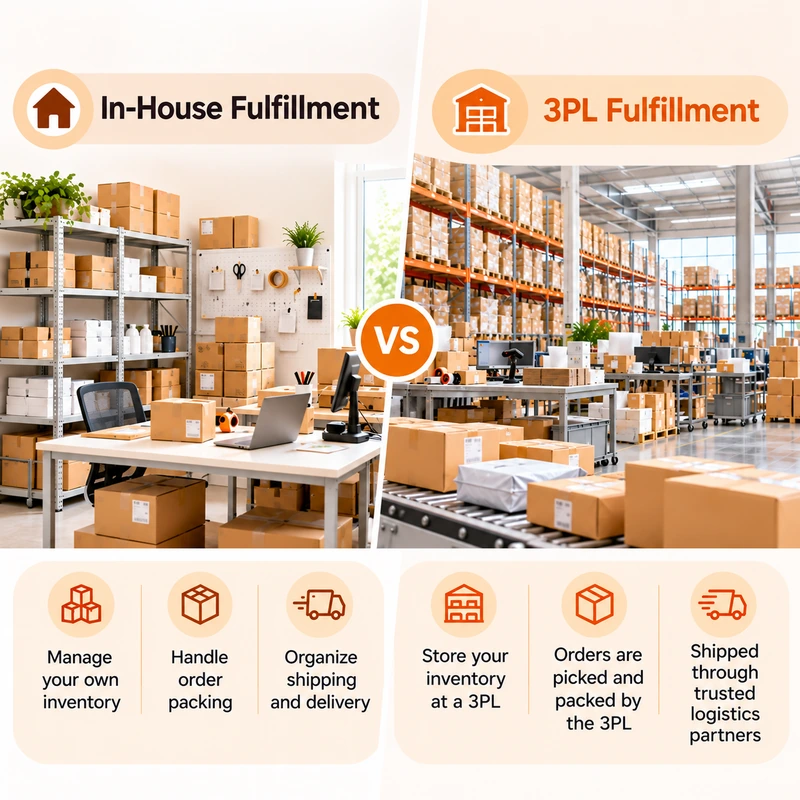
For a smaller store with manageable orders, in-house fulfillment may remain practical.
The calculation can change when order volume, inventory, SKU count, destinations, or packing requirements become more difficult for your existing team to manage.
When Should You Consider Using a 3PL?
There is no universal order volume at which every ecommerce business needs a 3PL.
A store selling small, lightweight products may have very different requirements from one managing large products, dozens of SKUs, or complex packaging.
Instead of relying on one number, watch for operational signs.
Fulfillment is consuming too much time.
If your team spends a significant amount of time packing orders and dealing with logistics issues, you may need to compare that workload with outsourcing.
You need more inventory space.
Higher stock levels can create storage and organization problems, especially when new SKUs are added.
Sales peaks are becoming harder to manage.
Promotions and seasonal demand can produce sudden increases in orders. Your fulfillment setup needs enough capacity to handle those changes.
You are shipping to more markets.
Additional destinations can introduce different shipping options, costs, delivery expectations, and import considerations.
Your operation has become difficult to coordinate.
As more people, systems, inventory locations, and logistics providers become involved, maintaining a clear order workflow can become increasingly important.
None of these signals automatically means outsourcing is the answer. They indicate that it may be worth comparing your existing process with a 3PL model.
What to Look for in a 3PL Ecommerce Fulfillment Partner
Once you decide to explore 3PL ecommerce fulfillment, avoid evaluating providers on one factor alone.
Product and Operational Fit
Start with your actual products.
Ask whether the provider can handle your product type, SKU count, inventory volume, packaging requirements, destinations, and expected order patterns.
If your products require special storage or handling, confirm those requirements directly.
Order Management
Understand exactly how orders reach the fulfillment operation.
Ask how order information is shared, how inventory updates are handled, and what happens if an order needs to be changed or cancelled.
If platform integration matters to you, verify the specific integration rather than assuming it is available.
Pricing Structure
Look beyond the headline shipping quote.
Depending on the provider, fulfillment costs can involve receiving, storage, picking, packing, packaging materials, shipping, returns, and additional services.
Ask for a breakdown that reflects your actual products and order profile.
Inventory Visibility
You need a practical way to understand how much inventory remains and when replenishment may be necessary.
Ask how stock levels are reported and how inventory discrepancies are addressed.
Exceptions and Communication
Normal orders are only part of the process.
Find out what happens when an item is unavailable, a parcel is delayed, inventory does not match records, or another fulfillment issue occurs.
Clear responsibilities and communication procedures can make these situations easier to manage.
Is 3PL Ecommerce Fulfillment Right for Your Store?
3PL ecommerce fulfillment is ultimately an operational decision.
If your existing fulfillment process is manageable, there may be no reason to outsource immediately. But when inventory storage, packing, shipping, tracking, and order coordination begin consuming more resources, comparing 3PL options can help you understand whether a different model makes sense.
Before contacting providers, document your product types, SKU count, typical order volume, target markets, packing requirements, and current fulfillment challenges. That gives potential partners a clearer picture of what your business actually needs.
If you are exploring a new fulfillment setup, GoShipFulfil can review your products, order volume, target markets, packaging requirements, and shipping needs with you to discuss an appropriate workflow.