Running a dropshipping store means you don’t have to manage your own warehouse. But that doesn’t mean every order runs smoothly.
A supplier runs out of stock. A customer receives the wrong item. Another order is still waiting to ship.
Before long, you will find that you’re spending more time chasing suppliers and sorting out orders than growing your store.
That’s where a dropshipping agent can come in.
But what exactly does an agent handle, and how do you know if you need one?
What Does a Dropshipping Agent Do?
A dropshipping agent is a person or company that helps ecommerce sellers manage parts of their supply chain, from finding suppliers to coordinating order fulfillment. Unlike a supplier that mainly provides products, an agent may work with multiple suppliers and handle different stages of the process.
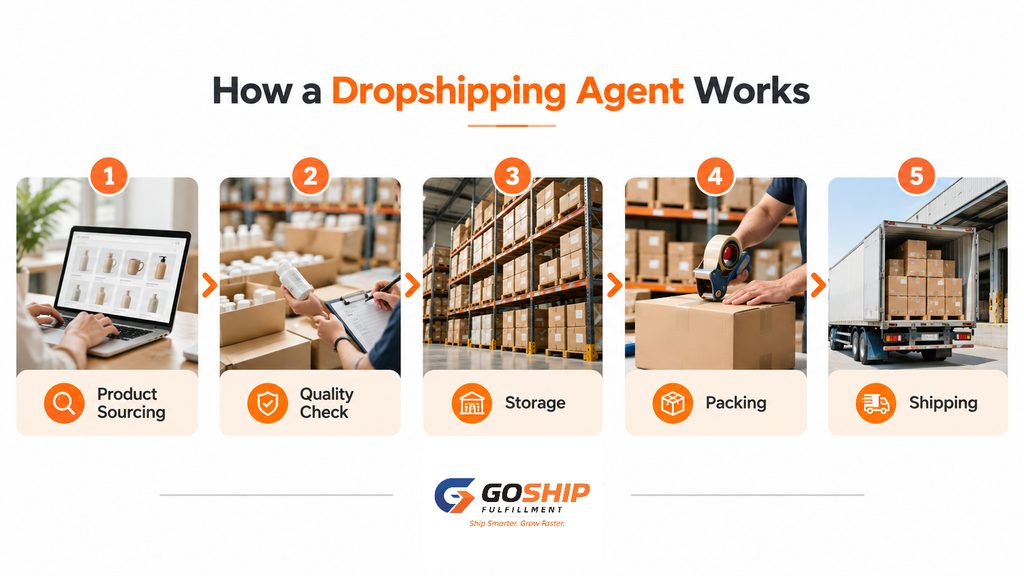
Depending on the services offered, a dropshipping agent may help with:
- Product sourcing: Finding suppliers, comparing prices, and arranging samples.
- Quality checks: Checking products for visible damage, incorrect items, or packaging issues before shipping.
- Branding and customization: Coordinating custom labels, branded packaging, and inserts.
- Order fulfillment: Managing packing, shipping arrangements, and tracking information.
- Supplier communication: Following up on stock availability, order changes, and unexpected problems.
Not every dropshipping store needs an agent from day one. If you’re testing a few products and your suppliers are handling orders smoothly, your current setup may be enough.
But as orders grow, managing multiple suppliers, checking product quality, and keeping up with fulfillment can take more time. That’s when a dropshipping agent may become worth considering.
How to Choose the Right Dropshipping Agent
Not every dropshipping agent will be the right fit for your store. Before making a decision, look beyond the service list and consider how the agent would handle your actual products and orders.
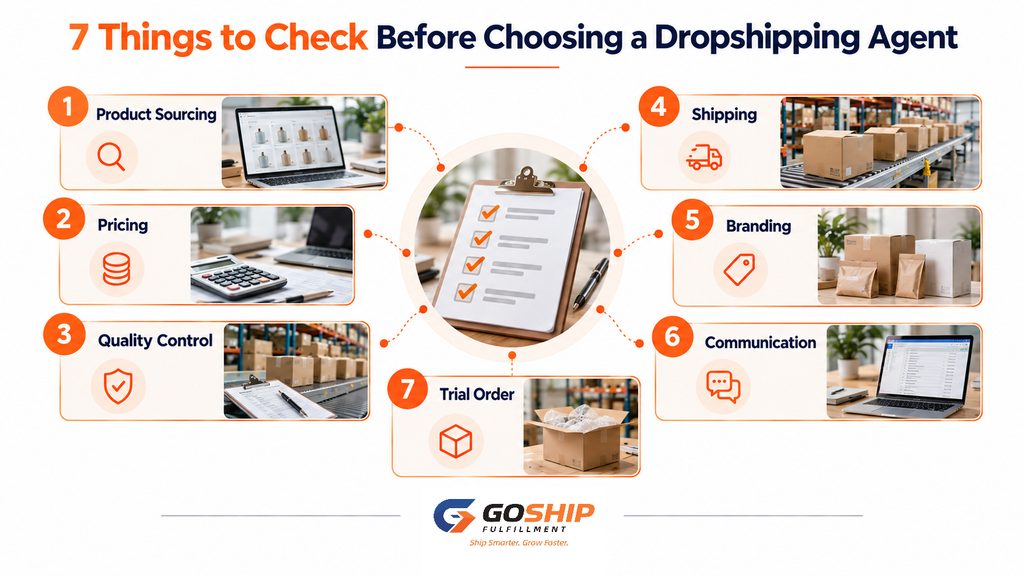
Here’s what to look for when choosing a dropshipping agent.
1. Product Sourcing Capabilities
Found a product you want to sell? Start by sending the agent a product link or photo and see what they can find.
A reliable agent should be able to explain the available product sourcing options, including differences in price, product specifications, and minimum order quantities.
If a product is unavailable, ask whether they can suggest alternatives. And before placing a larger order, check whether you can review a sample.
2. Pricing and Transparency
Two agents may quote the same product price, but that doesn’t mean you’ll pay the same amount per order.
One quote might include packaging and order handling, while another charges separately for these services.
When comparing agents, ask for a breakdown of the product cost, shipping fees, and any additional charges for inspection, packaging, or storage.
Make sure you’re comparing quotes for the same product, order quantity, and shipping destination.
What matters is your total cost per order and how much room it leaves for profit—not just the cheapest product price.
3. Quality Control Process
Imagine a customer orders a black phone case but receives a blue one. Or a product arrives with damaged packaging.
These are the kinds of problems you want to catch before an order ships.
Ask the agent what their product inspection process covers. Do they check product variations, quantities, and visible damage? Can they provide photos when something looks wrong?
More importantly, find out what happens when an issue is discovered. Will the agent contact the supplier, arrange a replacement, or ask for your approval before shipping?
Not every agent offers the same level of inspection, so make sure you understand what’s included before placing orders.
4. Fulfillment and Shipping Options
Fast shipping sounds great, but what does it actually mean for your customers?
Delivery times can vary depending on the product, destination, and shipping method. It’s also worth knowing how long an order takes to process before it even leaves the warehouse.
Tracking is another consideration. Will customers be able to follow their parcels? And if a package gets delayed or lost, how will the agent help resolve the issue?
For sellers keeping inventory in a warehouse, stock visibility and replenishment arrangements are also worth discussing before getting started.
5. Branding and Customization Support
Selling products under your own brand? Custom packaging can be a good place to start.
Some dropshipping agents can help with branded boxes, custom labels, or package inserts. But the options often depend on the product and order quantity.
For example, adding a logo to the packaging may require a minimum order quantity (MOQ), while printed inserts might be available for smaller orders.
It’s worth comparing the costs and asking whether you can review a sample before committing.
You don’t need every customization option from day one. The right choice is one that fits your budget and where your business is now.
6. Communication and Order Management
A dropshipping agent might offer everything you need on paper, but working together can still be frustrating if communication is slow or unclear.
Think about how your daily orders will be handled. Will you need to send them manually, or can order information be transferred from your Shopify store? How will you know when an order has been processed or shipped?
Problems will come up occasionally, too. Whether it’s an out-of-stock product, an order change, or a shipping issue, you’ll want to know who to contact and how quickly you can expect a response.
Clear communication and a workflow that fits your store can make everyday order management much easier.
7. Test Before Committing
An agent may look like a great fit during your initial discussions, but the real test comes when they start handling your orders.
A sample or small trial order can give you a better idea of what working together will actually be like.
You’ll get to see whether the products match your expectations, how they’re packaged, and whether the agent keeps you updated throughout the process.
It’s also a chance to spot unexpected costs or communication problems before moving more orders to the agent.
If you’re considering bulk purchasing or custom-branded products, a smaller initial order may also help you avoid tying up too much money in unsold inventory.
One successful trial doesn’t guarantee everything will always go smoothly, but it can help you make a more informed decision.
Finding the Right Partner for Your Store
The right dropshipping agent should fit your products, budget, and daily operations.
At GoShipFulfil, we help ecommerce sellers explore product sourcing, custom packaging, and order fulfillment options based on their business needs.
Have a product in mind? Share your requirements with us to get started.
FAQ
How much does a dropshipping agent cost?
Costs vary depending on the products and services involved. A low product quote may not include packaging, storage, handling, or shipping fees. What matters is the total cost per order, including any additional charges that could affect your profit margins.
Do dropshipping agents require a minimum order quantity?
Not always. Some agents can handle individual orders, while others may require minimum quantities for certain products or custom packaging.
Minimum quantities may also differ between standard products and customized packaging, so confirm the requirements for each option.
Can I use a dropshipping agent if I already have a supplier?
Yes, some dropshipping agents can work with your existing supplier. Instead of sourcing new products, they may help with receiving inventory, product inspection, storage, and order fulfillment. The exact arrangement depends on the agent’s services and whether your supplier can ship products to their warehouse.