
A $1,000 sale sounds much better than a $20 sale. But does it actually leave you with more money?
High ticket dropshipping can be more profitable per order, but it doesn’t always mean higher profit margins. Shipping, advertising, returns, and supplier costs can take a large share of your revenue.
That’s the appeal—and the challenge—of high ticket dropshipping. You may earn more from each sale, but you also need to pay closer attention to your costs.
So how much profit can you actually make? Let’s look at the numbers and what affects your earnings.
What Is High Ticket Dropshipping?
High ticket dropshipping is a business model. You can sell higher-priced products without holding any inventory. These products often cost several hundred dollars or more. But there is no fixed price that makes a product “high ticket.”
When a customer places an order, your supplier ships the product straight to them. You run the online store, the marketing, and customer service.
For example, you might sell a premium standing desk for $800. Your supplier handles the product and shipping. You focus on running your store.
Low-ticket dropshipping usually needs more orders to reach the same revenue. High ticket dropshipping is different. It aims to earn more from each sale.
High Ticket vs Low Ticket Dropshipping: Which Makes More Money?
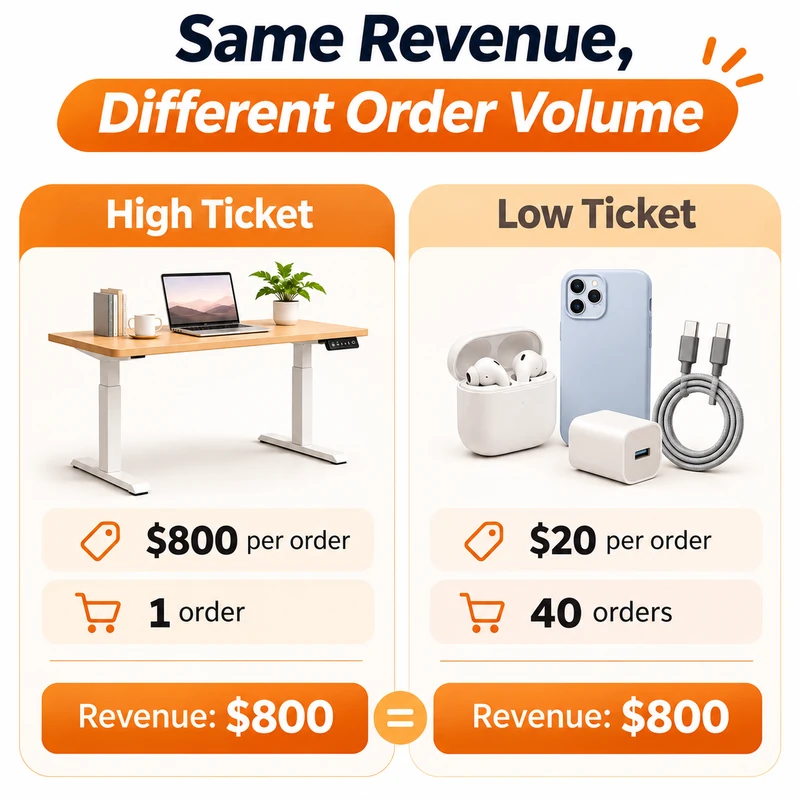
The biggest difference is how much money each order can bring in.
Say a low-ticket store sells phone accessories for $20, and a high-ticket store sells office furniture for $800.
The second store needs far fewer orders to hit the same revenue.
But revenue isn’t profit.
| Factor | High Ticket | Low Ticket |
| Selling price | Higher | Lower |
| Orders needed for the same revenue | Fewer | More |
| Potential profit per order | Can be higher | Usually smaller |
| Cost of a return | Can be substantial | Often lower |
| Customer buying decision | Usually takes more research | Can be quicker |
Profit in dollars and profit margin are also two different things.
Profit margin is the share of your sales revenue left after costs.
For example, making $100 on a $1,000 sale is a 10% margin. Making $15 on a $50 sale is a 30% margin.
The first order earns more dollars, but the second keeps a bigger share of the price.
Neither number tells the whole story until you add up all your costs.
How Much Profit Can You Actually Make?
Let’s compare two products with the same selling price.
Imagine you’re considering a premium coffee machine and a large standing desk. Both sell for $800.
The coffee machine fits into a manageable shipping carton. The desk is heavier and needs more protective packaging.
Here is how their costs might look.
All figures below are hypothetical examples, not actual supplier quotes or industry averages.
| Cost Per Order | Coffee Machine | Standing Desk |
| Selling price | $800 | $800 |
| Supplier cost | $500 | $480 |
| Shipping and packaging | $35 | $110 |
| Payment processing | $24 | $24 |
| Advertising | $100 | $100 |
| Return and warranty reserve | $20 | $45 |
| Amount remaining | $121 | $41 |
| Contribution margin | 15.1% | 5.1% |
The standing desk costs $20 less to buy from the supplier. At first, that looks like a better deal.
But its shipping and packaging cost $75 more.
We’ve also set aside more money for possible returns and warranty problems.
As a result, the coffee machine leaves $121 per order, while the desk leaves only $41.
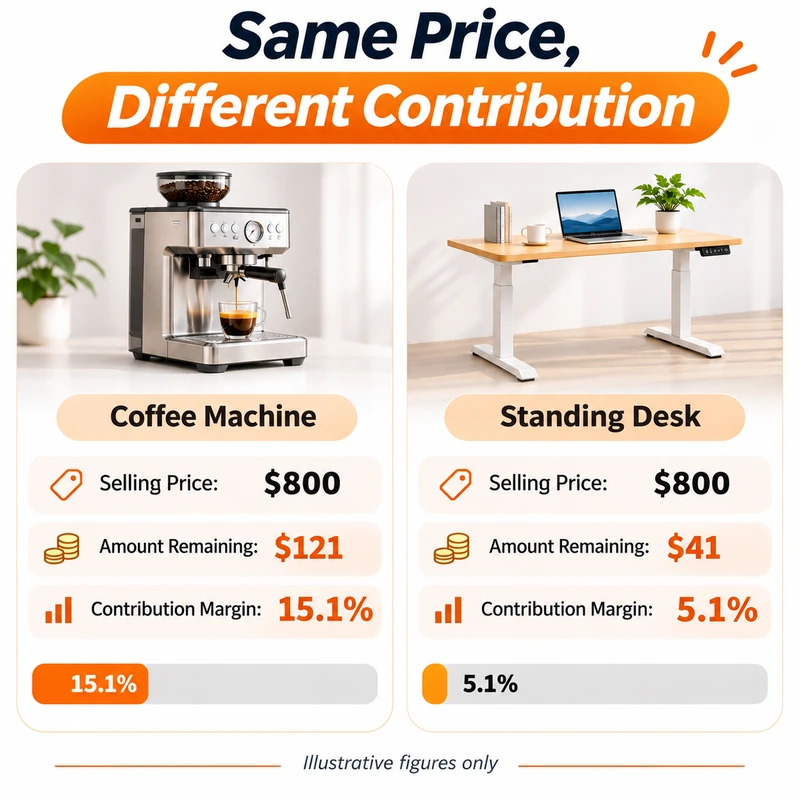
This remaining amount is called the contribution. It is the money left after the costs assigned to that order. It still needs to help cover fixed business expenses, such as store subscriptions and staff.
The lesson is not that coffee machines are always more profitable than desks. Real costs vary by supplier and destination.
The point is that two products with the same selling price can produce very different financial results.
A useful calculation is:
Order contribution = Selling price − Product cost − Shipping − Payment fees − Advertising − Expected return and warranty costs
Then divide the contribution by the selling price to find the contribution margin.
This gives you a clearer picture than comparing selling prices alone.
What Can Reduce Your High Ticket Dropshipping Profit?
Some costs are easy to see. Others only become clear after you start receiving orders.
Four areas deserve particular attention.
1. Customer Acquisition Costs
High-ticket customers often take longer to make a purchase.
Someone buying an expensive coffee machine may compare several brands. They may watch product reviews and check warranty details before ordering.
You may need to spend more on advertising to reach and convince these customers.
This is where customer acquisition cost (CAC) matters.
CAC is the amount you spend to gain one paying customer.
For example, if you spend $500 on ads and acquire five new customers, your average CAC is $100.
Now imagine that cost rises to $160.
In our coffee machine example, the contribution would fall from $121 to $61 per order.
The product and selling price haven’t changed. Only the cost of getting a customer has increased.
This is why advertising performance matters as much as product pricing.
2. Shipping and Packaging Costs
Expensive products aren’t always big. But there are many high-ticket categories with heavy or even fragile items.
The cost to ship will include weight, package size, destination, and method of delivery.
Some carriers use dimensional weight. This means a large, light box may cost more to ship. Because it takes up more space.
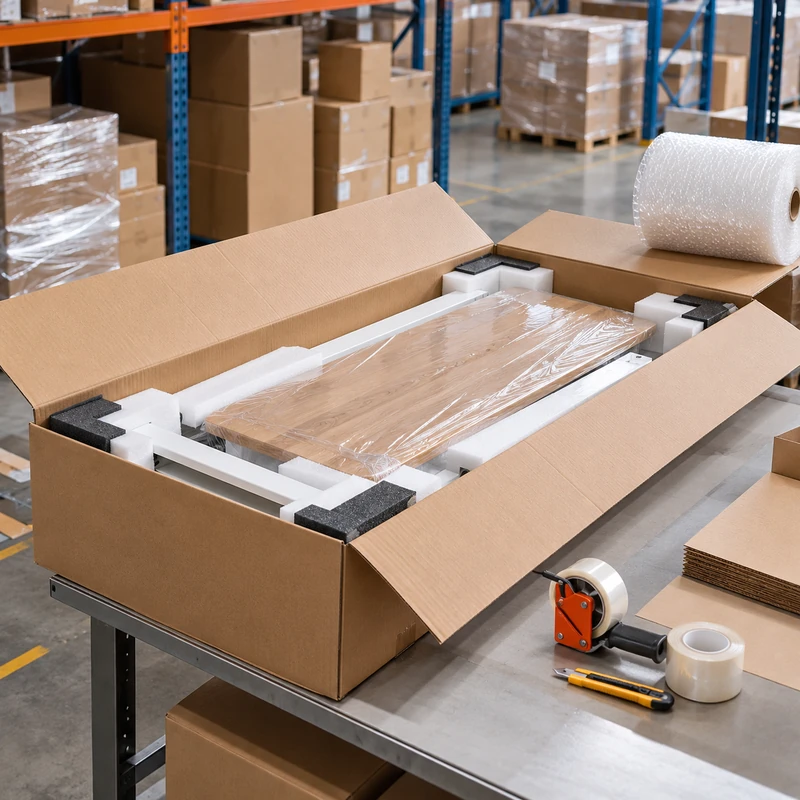
For example, a bulky chair may cost more to deliver than a small projector, even if both sell for the same price.
Packaging matters too.
Fragile products may need stronger boxes, extra padding, or special handling. These add costs. But poor protection may lead to damage claims.
Before setting your selling price, you need to compare shipping quotes. Especially pay attention to the product’s packed weight and dimensions.
A small difference in the supplier price may matter less than a large difference in delivery costs.
3. Returns and Warranty Claims
Returns can be very costly for high-value products.
Imagine a customer returns a large standing desk.
You may need to arrange pickup, pay for return shipping, and inspect the product. Some items may also need new packaging or replacement parts.
The product may not be good enough to resell at its original price.
This is why the earlier calculation includes a return and warranty reserve.
A reserve is an estimated amount you account for to cover possible returns and warranty claims. It is not a cost you pay on every order.
For example, if you expect a few returns, you can spread their average cost across all your orders.
Base this amount on your own sales history or a reasonable estimate. Don’t just copy a fixed percentage from another store.
Supplier terms matter here.
Before you start selling, find out who pays when an item arrives damaged. Also ask how warranty claims are handled.
4. Cash Flow
A profitable order can still create a cash flow problem.
Suppose a customer buys a product for $1,200. Your supplier requires $750 before shipping it.
But your payment provider has not yet released the customer’s payment.
You still need to pay the supplier.
This is called a cash flow gap. The money is on its way, but it isn’t there when you need it.
High-ticket orders can make this gap bigger. The supplier payment is often much higher.
Having enough working capital helps you pay for orders, refunds, and surprise charges. You won’t have to wait for the next customer’s payment.
When Does High Ticket Dropshipping Make Sense?
It can make sense when each order leaves enough money to cover your costs and still give you a decent return.
Don’t let the selling price make the decision for you.
A product looks better when shipping costs are easy to predict, the supplier has clear after-sales terms, and customers have a good reason to buy it.
For example, a small premium product with reliable shipping may earn you more than a bigger product at the same price.
That doesn’t mean you should always skip bulky items. Just make sure their extra costs are built into your price.
It’s also smart to test a few scenarios.
What if ad costs go up? What if shipping gets pricier? Will each order still cover your fixed costs?
If you work with overseas suppliers, planning your sourcing and fulfillment can make these numbers easier to handle.
A partner like GoShipFulfil can help you talk through product quotes, packaging needs, and shipping options. Exact costs and options depend on the product and where you ship.
The goal is simple: know your full costs before you set a price.
Final Thoughts
High ticket dropshipping can be profitable. But a higher price doesn’t automatically mean a better margin.
A product that sells for $1,000 may leave you less money than you expect. Shipping, advertising, returns, and other costs all take a share.
The better question isn’t “How expensive is this product?”
It’s “How much money will this order actually leave me?”
Once you know that number, it’s easier to decide which products are worth selling.