
From everyday basics to seasonal fashion, clothing offers plenty of options for building a dropshipping store.
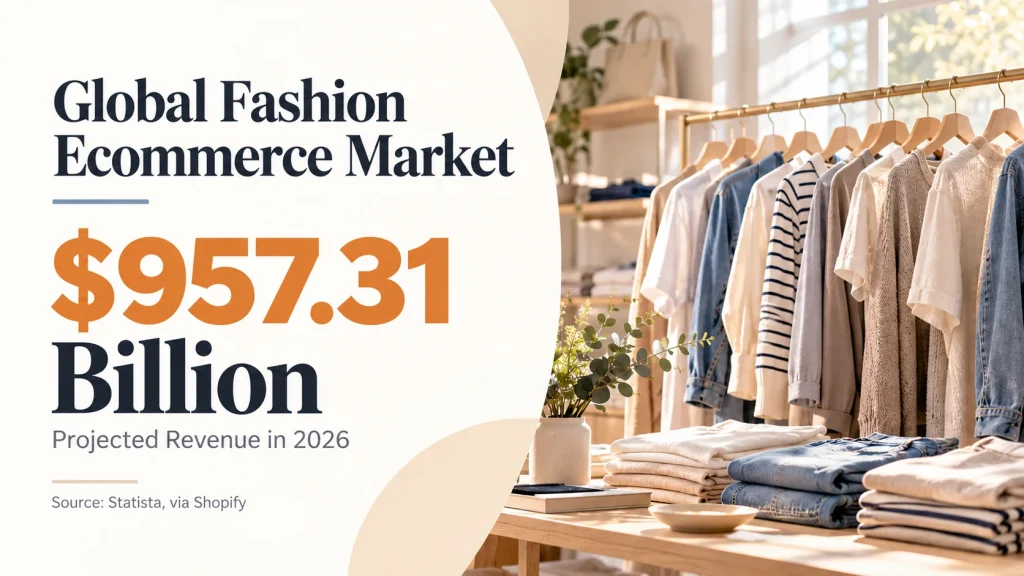
According to Statista, global fashion ecommerce revenue is projected to reach $957.31 billion in 2026. The size of the market shows how established online fashion shopping has become, but it doesn’t mean every clothing store will find success.
Sizing, fabric quality, and returns can quickly become problems if you haven’t checked what you’re selling. A shirt might look great in supplier photos, only for customers to find that the fit or material doesn’t match their expectations.
As with sourcing cosmetics and skin care products, finding a reliable supplier matters. For clothing, you’ll also need to pay close attention to size charts, product samples, inventory availability, and how returns are handled.
This guide covers how to start a clothing dropshipping business, from choosing a niche and evaluating suppliers to setting up your store, pricing products, and managing customer orders.
What Is Clothing Dropshipping?
Clothing dropshipping is a business model where you sell apparel online without storing the products yourself. When a customer places an order, your supplier or fulfillment partner prepares and ships the item directly to them.
You handle the online store, pricing, marketing, and customer service, while your partner manages the physical fulfillment. Depending on the arrangement, you may be able to sell clothing without purchasing inventory upfront.
How to Start Clothing Dropshipping
Starting a clothing dropshipping business involves more than finding fashionable products. Here’s how to approach the process.
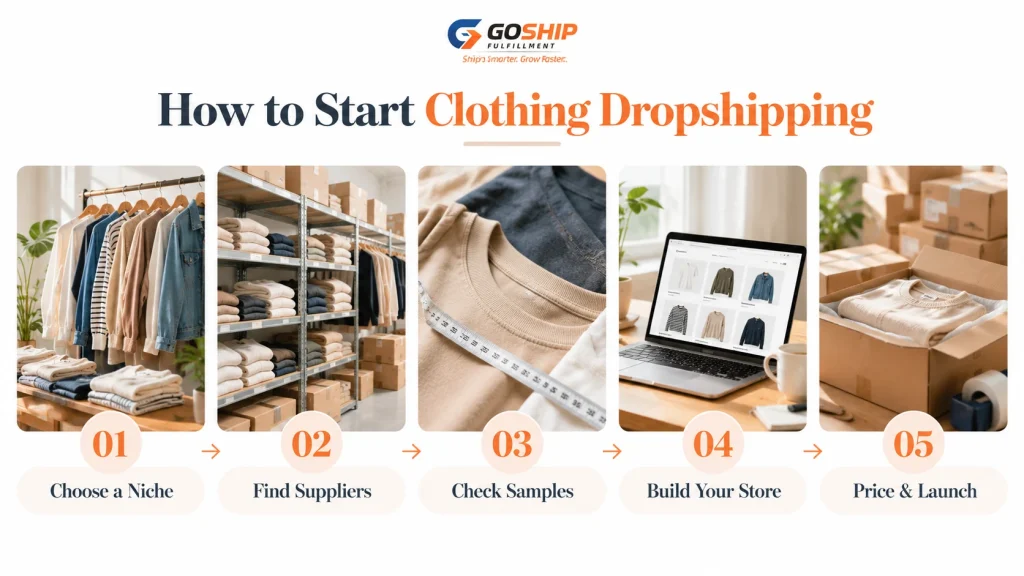
Step 1: Choose a Clothing Niche
Selling too many clothing styles at once can make it harder to establish a clear store identity and attract the right customers.
Some clothing niches worth exploring include:
- Streetwear: Oversized T-shirts, hoodies, and casual urban styles.
- Women’s casualwear: Everyday dresses, tops, and matching sets.
- Athleisure: Leggings, joggers, and comfortable everyday activewear.
- Modest fashion: Longer silhouettes and clothing designed around specific coverage preferences.
- Plus-size fashion: Clothing designed with inclusive sizing and fit considerations.
Rather than choosing a niche simply because it’s trending, think about who you want to sell to.
Competing stores, customer reviews, and social media discussions can offer useful clues about what shoppers want. Are they looking for particular styles? Do they struggle to find clothing in the right sizes, fabrics, or fits?
These insights can help you narrow down your product range. It’s also worth checking whether potential suppliers offer suitable styles, consistent sizing, and reliable stock availability before committing to a niche.
Step 2: Find Reliable Clothing Suppliers
A supplier with hundreds of clothing styles isn’t necessarily the right choice for dropshipping. What matters more is whether they can provide consistent products and handle orders accurately.
Fabric specifications, size charts, available colors, and product variations are good places to start when comparing suppliers. Product photos alone aren’t always reliable, especially when different suppliers use similar images for garments that may vary in material or fit.
SKU management deserves particular attention. A T-shirt available in five sizes and four colors can have 20 separate variations, each with its own stock availability.
Before working with a supplier, there are a few practical questions worth asking:
- Inventory updates: How often is stock information updated, and what happens when a size or color sells out?
- Order accuracy: How are product variations identified and checked before shipping?
- Defective items: What happens if a garment arrives damaged or doesn’t match the agreed specifications?
- Order fulfillment: Can the supplier handle individual customer orders, or will you need a separate fulfillment partner?
Replenishment is another consideration, particularly if you’re selling seasonal clothing or styles that may become popular quickly.
A good sourcing arrangement should make these responsibilities clear before your first order. Otherwise, even a small inventory or picking mistake can turn into a customer complaint.
Returns deserve particular attention when selling clothing. Before committing to a supplier, make sure both sides understand how size-related exchanges, damaged items, and refunds will be handled.
Step 3: Order Samples and Check Product Quality
Before adding clothing to your store, it’s worth ordering samples whenever possible. Supplier photos and size charts are helpful, but they can’t tell you exactly how a garment will look or feel in person.
The measurements are a good starting point. You can compare the actual garment with the supplier’s size chart, paying attention to areas such as the chest, waist, hips, and length. If you’re selling a style in several sizes, checking more than one size may reveal inconsistencies that aren’t obvious from a single sample.
Fabric and construction matter just as much. The material, stitching, seams, and overall finish can tell you a lot about the garment’s quality. For items such as leggings or fitted tops, it’s also worth checking how the fabric stretches and whether it becomes transparent. Washing a sample according to its care instructions may reveal shrinkage or changes in shape.
One good sample isn’t enough to guarantee consistent future orders. It’s worth confirming whether the supplier can maintain the same fabric specifications, sizing, and product details when restocking.
A record of approved samples and measurements can also come in handy. It gives you a reference when creating product listings or comparing future shipments against the original specifications.
The goal isn’t to test every garment like a laboratory. It’s to catch obvious problems before your customers do.
Step 4: Set Up Your Online Clothing Store
Once you’ve selected your products and reviewed the samples, it’s time to build your online store.
Platforms like Shopify let you organize clothing into collections, create product pages, and manage different sizes and colors.
For apparel, clear product information matters more than elaborate store design. Customers can’t try on your clothes before buying, so your listings need to help them understand what they’re getting.
A useful clothing product page includes accurate size measurements, fabric composition, available colors, and care instructions. Photos showing different angles and close-up details can help shoppers get a better sense of the garment. When model photos are available, the model’s measurements and the size worn can provide additional context.
Generic supplier descriptions often leave out details customers actually want to know. The information you gathered while reviewing samples can make your product listings more useful.
Product variations also need to be set up carefully. Each size and color combination should match the supplier’s corresponding SKU, so the correct item can be identified when an order comes in.
Before launching, it’s a good idea to test the shopping experience. Can customers select the right variations? Do shipping costs appear correctly? Can order details be passed to your supplier or fulfillment partner?
Shipping and return policies should also be easy to find. Customers need to know what to expect before placing an order.
It’s also worth confirming how orders will move from your store to your supplier or fulfillment partner. Whether the process is handled through a platform integration or manually, the correct product variations, customer addresses, and shipping details need to reach the team preparing each order.
Step 5: Set Prices and Prepare for Launch
The price your supplier quotes is only part of what it costs to sell a garment.
Your retail price needs to account for the product itself, packaging, order fulfillment, shipping, payment processing, and marketing. Potential returns and other operating expenses can also affect how much you actually earn.
For example, an $8 T-shirt might cost another $5 to package and ship. If you sell it for $25, that leaves $12 before advertising, payment fees, returns, and other expenses.
Not every item in your collection will have the same profit margin. A lightweight T-shirt and a bulky hoodie may have very different shipping costs, even when their selling prices are similar.
Once your pricing is in place, a smaller initial collection may be easier to manage than dozens of styles launched at once.
Your first orders can tell you a lot about how the business works in practice. Are the correct products being picked and shipped? Do actual shipping costs match your estimates? Are delivery expectations realistic?
Customer feedback can also reveal which styles and sizes attract interest, along with problems you might not have noticed during preparation.
With a smaller collection, there’s more room to adjust your sourcing and fulfillment arrangements before expanding.
How to Market Your Clothing Dropshipping Store
Once your store is set up and ready to launch, the next question is: how do you get customers to notice it?
Clothing is highly visual, making product presentation an important part of marketing. But polished product photos aren’t always enough to show how an item looks and feels in everyday use.
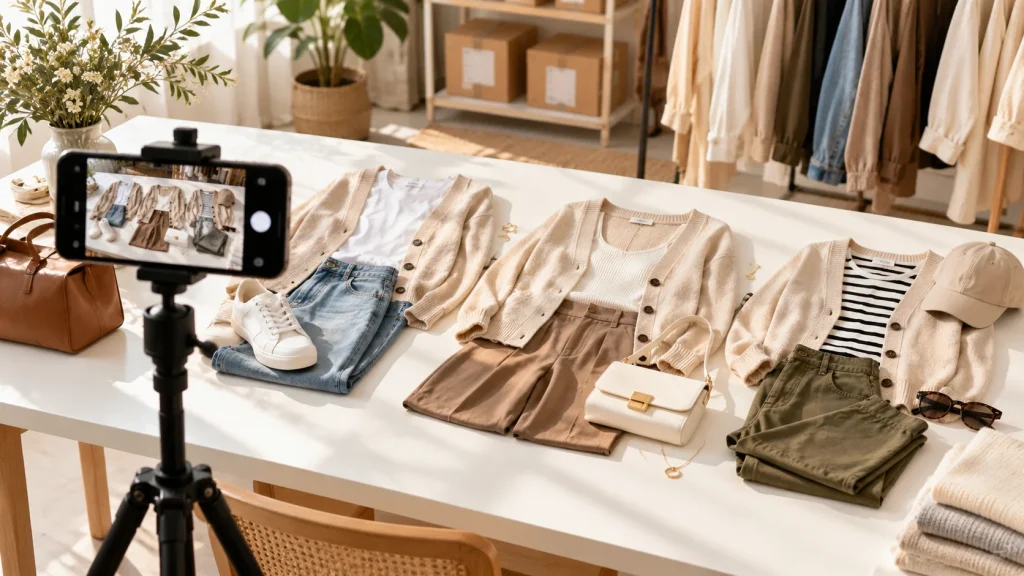
Short styling videos can demonstrate different ways to wear the same garment. A simple clip showing the fit, movement, and fabric texture may answer questions that static photos cannot.
For example, a casualwear store could show three ways to style one cardigan instead of posting three separate product photos. Content built around outfit ideas, seasonal collections, or everyday occasions gives shoppers more reasons to explore a store.
Platforms like Instagram and TikTok are useful places to share this type of content, particularly when you’re still building an audience. Rather than trying every marketing channel at once, it may be more manageable to focus on one or two and see what resonates with potential customers.
Views and likes can be encouraging, but store visits, product inquiries, and actual orders offer a clearer picture of whether your marketing is reaching the right shoppers.
Final Thoughts
Starting a clothing dropshipping business doesn’t require a huge product catalog. A focused collection, reliable suppliers, and a clear understanding of your customers can give you a practical starting point.
Begin with a few products, learn from your first orders, and make adjustments as you discover which styles sell and where improvements are needed.
If you’re ready to explore clothing dropshipping, GoShipFulfil can discuss sourcing, packaging, and order fulfillment options based on your product requirements and target markets.
Share your clothing product requirements with our team to get started.