Two products in your store have 20 units left.
One sells 10 units a day. The other sells just two units a week.
Should you replenish both at the same time?
Probably not.
You should restock products based on how quickly they sell, how long suppliers take to deliver, and how much safety stock you need.
This is where inventory replenishment becomes more than simply ordering products when stock runs low. Inventory replenishment involves more than simply ordering products when stock runs low.
The goal isn’t to keep every product fully stocked. It’s to have the right inventory available when customers want to buy it.
What Is Inventory Replenishment?
Before looking at how to manage stock, let’s first understand what inventory replenishment means.
Inventory replenishment is the process of restocking products to maintain enough inventory to meet customer demand.
It involves monitoring stock levels, reviewing sales, checking supplier lead times, and deciding when and how much to reorder.
For example, if your store regularly sells 100 bottles of a skincare product each month, you need to plan the next purchase before the current stock runs out.
But how is replenishment different from inventory control?
Inventory replenishment is closely related to inventory control, but they serve different purposes.
Inventory Control: Keeps track of existing stock, its location, and its condition.
Inventory Replenishment: Determines when and how much new stock should be purchased.
In simple terms, inventory control tells you what you have. Replenishment helps you decide what you need next.
Why Replenishment Should Depend on Product Demand
Products at different stages of their life cycle may need different restocking plans.
Not every product sells at the same speed. Sales can also change as a product becomes more established.
If you use the same plan for every product, you may end up with extra stock. Or you may miss sales.
A good place to start is to look at three stages of product demand.
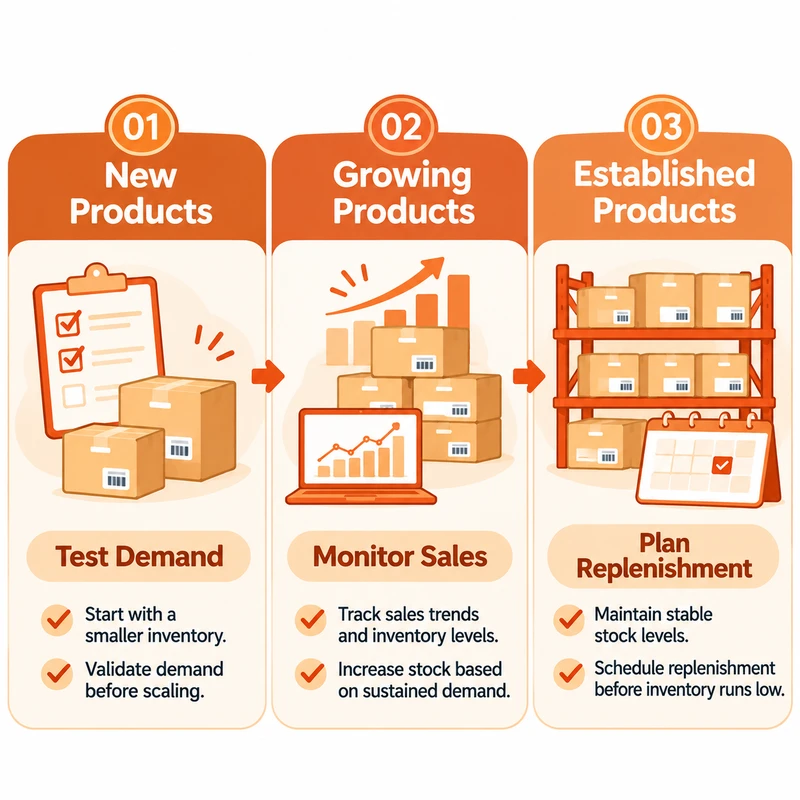
New Products: Avoid Ordering Too Much Too Early
When a product first enters your store, you may not know how customers will respond.
Supplier forecasts and market research can give you an idea. But real orders are better evidence.
For example, a new home fragrance product may get a lot of interest in its first few weeks. That doesn’t mean demand will stay steady.
Don’t buy a large quantity right away. Try testing the product first. You can use dropshipping or a smaller first order, if that’s available.
This gives you more information before you spend more money on stock.
Growing Products: Watch Sales and Supplier Lead Times
Some products start slowly and then become more popular.
This is when restocking plans become more important.
Say a skincare product sells three units a day. After a successful promotion, it sells eight units a day.
Your old reorder point may no longer work.
If you keep using the old sales average, you could run out of stock before the next shipment arrives.
Check your sales often. Change your restocking plan when demand changes.
Established Products: Build a More Consistent Replenishment Plan
Products with steady sales are easier to plan for.
Say a supplement sells at a fairly steady rate each month. You can use past sales to estimate future demand.
This makes it easier to set reorder points and decide how much to buy. It also makes it easier to work with your suppliers.
But steady sales don’t mean demand will never change. Promotions, seasons, and new competitors can still affect sales.
The key is to check your numbers often. Don’t treat an old forecast as permanent.
When Should You Replenish Inventory?
Knowing when to reorder is just as important as knowing what to order.
Three things can help you decide when to restock and how much stock to keep.
Reorder Point
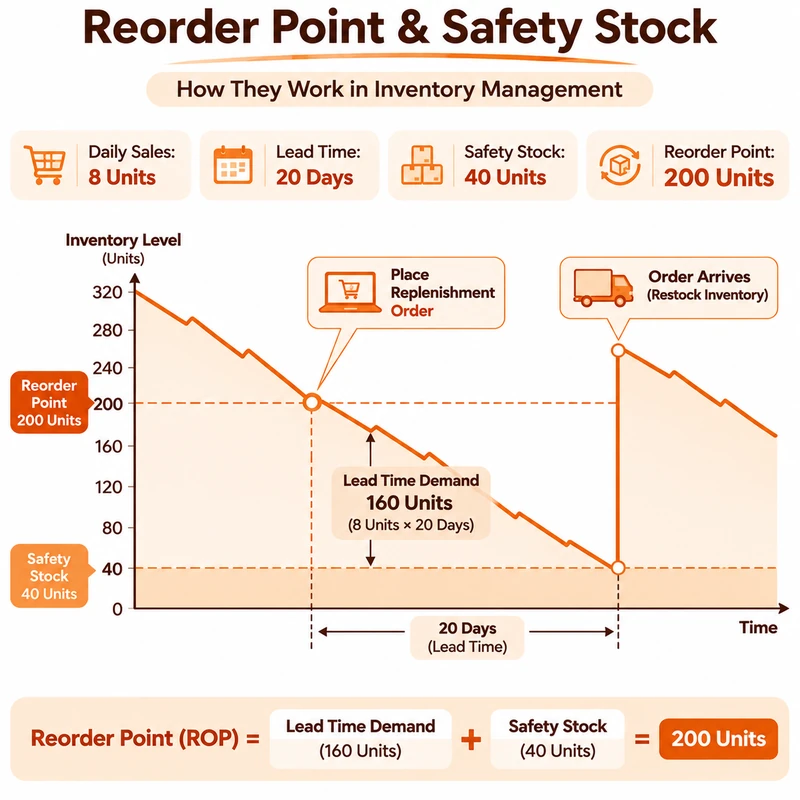
A reorder point (ROP) is the stock level that tells you it’s time to place a new order.
A basic formula is:
Reorder Point = Average Daily Sales × Lead Time + Safety Stock
For example, say your store sells eight units of a product each day.
Your supplier needs 20 days to prepare and deliver new stock. You also want to keep 40 extra units as a safety buffer.
Your reorder point would be:
(8 × 20) + 40 = 200 units
This means you should consider placing a new order when your inventory position approaches 200 units.
The goal is to give the next shipment enough time to arrive before your current stock runs out.
Supplier Lead Time
Supplier lead time is the time between placing an order and having the new products ready to sell.
It may include production, preparation, shipping, customs clearance, and warehouse receiving.
For example, a supplier may need 12 days to make an order. But the products still need more time to reach your warehouse. They also need time to be ready for fulfillment.
If you only plan around production time, you could run short of stock.
Always use the full expected restocking timeline. Don’t use only the factory’s production estimate.
Safety Stock
Safety stock is extra inventory you keep to cover unexpected changes.
These may include higher sales than expected, supplier delays, or shipping problems.
For example, say you normally sell eight units a day. Keeping 40 extra units gives you five extra days of coverage.
The right amount depends on two things. How predictable is your demand? How reliable is your supply chain?
Products with uncertain demand or long lead times may need a bigger buffer. Products with short, steady restocking cycles may need less.
Choosing Between Dropshipping and Holding Inventory
Your restocking plan also depends on how you source and fulfill each product.
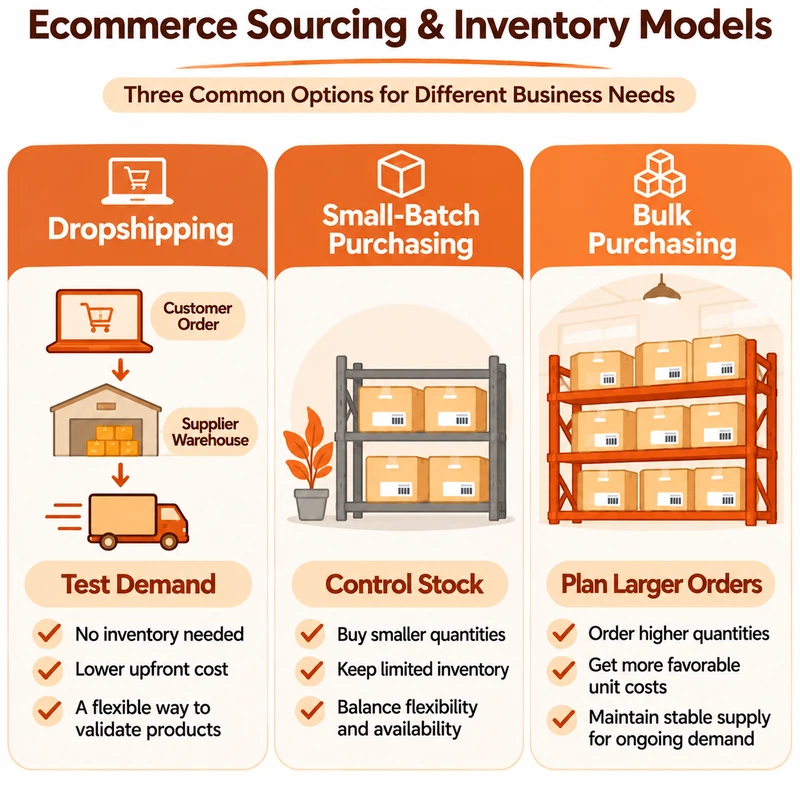
Dropshipping for Untested Products
When demand is still uncertain, dropshipping means you don’t have to buy stock in advance.
For example, a new fragrance accessory may get some early orders. But you don’t have enough sales history to justify a big purchase.
Using a supplier-held inventory model can help you test demand without investing in a large amount of inventory upfront.
Small-Batch Purchasing for Growing Products
Once a product starts to sell more steadily, a small inventory purchase may be worth thinking about.
This gives you more control over your stock. It also limits how much money is tied up in inventory.
Bulk Purchasing for Established Products
For products with steady demand, it may be worth comparing larger order quantities.
The supplier may offer different prices at different quantities. But a lower unit cost doesn’t always mean a better decision.
You still need to think about storage, cash flow, and product shelf life. You also need to think about the risk of unsold stock.
A store can use all three approaches at the same time, for different products.
If you’re looking at different sourcing and fulfillment options, GoShipFulfil can help. They can coordinate product sourcing, purchasing arrangements, inventory plans, and order fulfillment needs. The right approach depends on product demand, supplier availability, and your own business needs.
Common Inventory Replenishment Mistakes
Even with a restocking plan, some common mistakes can still cause stock problems.
1. Using the same reorder point for every product
Products sell at different speeds. A fast-moving product needs more attention than one that sells only now and then.
2. Ignoring supplier lead times
A product may have enough stock today. But it may not have enough to last until the next shipment arrives.
3. Ordering based only on lower unit prices
Buying more can lower the price per unit. But it also raises storage costs. It also raises the risk of unsold stock.
4. Relying too much on past sales
Past sales are useful. But they don’t always predict future demand. Promotions, seasons, and market trends can change how fast products sell.
Review your restocking plan whenever these things change.
Final Thoughts
Inventory replenishment isn’t about keeping every product fully stocked.
It’s about matching your purchases to real demand. You also need to think about how long new products take to arrive.
A new product may need a more cautious approach. A growing product needs closer watching. An established product may work well with a regular purchasing plan.
The best restocking plan is one that changes as your products and business grow.
If you need help with product sourcing, inventory plans, or order fulfillment, GoShipFulfil can help you talk through your options. The right choice depends on your business needs.