
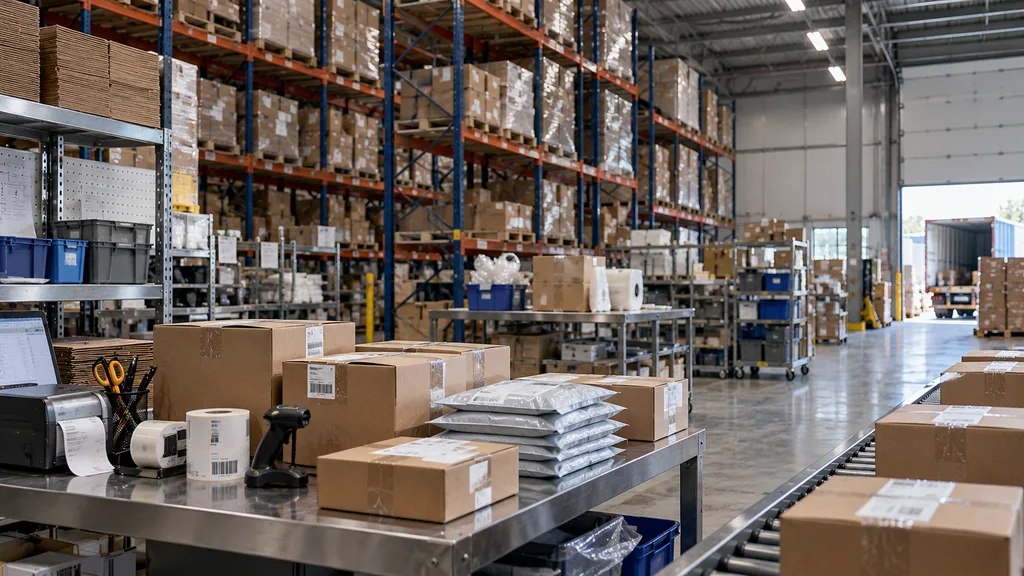
More orders usually mean good news for an online store. More sales, more customers, and more opportunities to grow.
But there’s another side to it.
As orders increase, so does the work behind each purchase. Products need to be available, orders need to be processed, and packages need to reach customers. What once took a few minutes can gradually take up a large part of your day.
Even sellers who don’t handle shipping themselves can run into trouble when suppliers, order updates, and delivery arrangements aren’t working together.
At some point, it’s worth asking: Is your order fulfillment process still supporting your business, or is it starting to slow you down?
What Does the Order Fulfillment Process Involve?
Before looking at what might be going wrong, it helps to understand how the order fulfillment process works.
Simply put, order fulfillment covers the steps involved in getting a customer’s order ready and delivered. It usually starts with inventory management, followed by order processing, picking, packing, shipping, and delivery.
Whether you handle these tasks yourself or work with a fulfillment partner, each step needs to run smoothly to keep orders moving.
So, how can you tell when your current process is starting to cause problems?
5 Signs Your Fulfillment Process Is Holding You Back
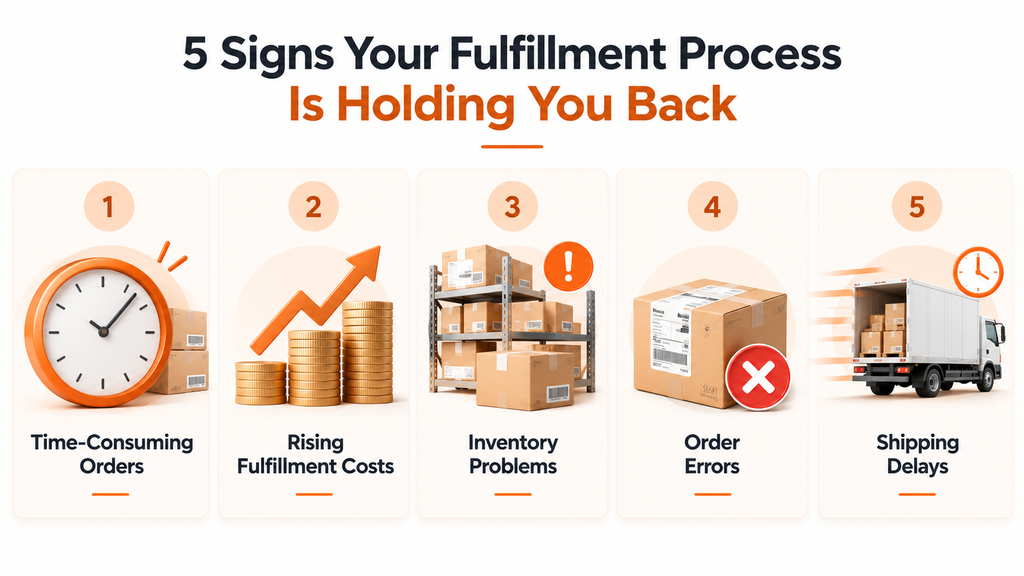
Not every fulfillment problem is easy to spot. Some build up over time, making them easy to overlook until they start affecting your daily operations.
Here are five signs worth paying attention to.
1. You’re Spending More Time on Orders Than Growing Your Store
When you’re just starting out, handling a few orders yourself might not take much time. You pack the products, arrange shipping, and move on to other tasks.
But as sales grow, those small tasks start adding up.
Before long, you could be spending hours preparing shipments, checking order details, and responding to delivery questions instead of focusing on marketing, finding new products, or improving your store.
And even if you use dropshipping, you’re not necessarily free from fulfillment work. Constantly contacting suppliers, forwarding order details, or following up on tracking updates can take just as much attention.
The warning sign isn’t simply being busy. It’s when routine order work repeatedly pushes aside the activities that help your business grow.
2. Fulfillment Costs Are Eating Into Your Margins
A product might look profitable when you compare its selling price with what you pay your supplier. But that doesn’t tell you how much you’ll actually keep.
Packaging, order handling, shipping, and additional service charges can all affect what you actually earn.
Consider a store selling a product for $35. If the product costs $12 and fulfillment-related expenses total $10, that leaves $13 before advertising, payment fees, returns, and other operating costs.
A few unexpected charges can make a noticeable difference.
This becomes particularly important for sellers working with several suppliers or shipping to different markets.
A low shipping quote doesn’t always mean a low overall cost. What matters is how much you spend to get each order to the customer.
If fulfillment costs keep rising and you can’t clearly explain why, it’s worth taking a closer look at what each order actually costs.
3. Inventory Problems Are Costing You Orders
Imagine running an advertising campaign for a product that’s selling well.
Orders start coming in, only for your supplier to tell you the product is out of stock.
Now you have to delay shipments, find an alternative, or contact customers about refunds.
If you hold your own inventory, your store might show a product as available even when it’s already sold out. For dropshipping sellers, the same problem can happen when supplier stock updates are delayed.
And even when you know stock is running low, slow replenishment can leave you unable to fulfill new orders.
You don’t necessarily need to manage a warehouse yourself. But you do need accurate stock information and a clear way to handle shortages.
If you’re regularly accepting orders for products that turn out to be unavailable, your inventory process may already be putting sales at risk.
4. Order Errors Are Creating More Customer Complaints
A customer orders a black backpack but receives a blue one.
Another receives a damaged product. A third opens their package and finds an item missing.
Each mistake creates another problem for the customer and another issue your store needs to resolve.
And from the customer’s perspective, it usually doesn’t matter whether the mistake happened at your supplier’s warehouse or with a shipping partner. They ordered from your store.
Repeated errors can lead to more support requests, refunds, replacement shipments, and customers who may think twice before ordering again.
For sellers working with outside suppliers, clear packing instructions and order checks can help reduce these mistakes.
If customers keep contacting you about wrong, missing, or damaged items, it’s worth looking more closely at how orders are being picked, packed, and shipped.
5. Shipping Delays Are Becoming a Regular Problem
An occasional late delivery is difficult to avoid. But when orders regularly take longer than expected, it may point to a bigger fulfillment problem.
Maybe your supplier takes several days to dispatch an order. Or packages sit waiting for carrier pickup after they’ve been packed.
For international orders, customs procedures and limited shipping options can add further delays.
Whatever the reason, customers are left waiting longer than they expected. Unpredictable delivery times also make it harder to give customers reliable estimates or respond confidently when they ask where their orders are.
The problem isn’t always how long shipping takes. It’s whether your fulfillment process can consistently meet the delivery expectations you’ve set.
If you’re regularly explaining late shipments to customers or struggling to predict when orders will arrive, your current fulfillment setup may no longer be keeping up with your business.
Frequently Asked Questions
1. Can small online stores experience fulfillment problems?
Yes. Fulfillment problems aren’t limited to stores handling hundreds of orders a day. Even a small store can run into stock shortages, incorrect shipments, or unreliable supplier updates. The impact often depends on how frequently these issues occur and how easily they can be resolved.
2. Are fulfillment problems different for dropshipping businesses?
They can be. Dropshipping sellers usually don’t handle inventory or packing themselves, but they still depend on suppliers to process orders correctly and provide accurate stock and shipping information. Limited visibility into these steps can make problems harder to identify and resolve.
3. Does a growing store always need a third-party fulfillment provider?
Not necessarily. Some sellers can continue managing orders themselves, especially when order volumes are manageable and their existing processes work well. Others may benefit from outside support as their operations become more complex. It depends on the store’s needs and available resources.
4. Can you improve fulfillment without changing suppliers?
In some cases, yes. Better order tracking, clearer communication, and more consistent inventory updates may help address certain problems. However, if the same issues continue despite these changes, it may be worth reviewing your current supplier or fulfillment arrangement.
Final Thoughts
A growing business needs a fulfillment process that can keep up with it.
The occasional mistake or shipping delay doesn’t necessarily mean something is wrong. But when the same problems keep coming back, they may be signs that your current setup is no longer working as well as it should.
Recognizing these issues is a good starting point. From there, you can look at what needs to change, whether that means improving your existing workflow or exploring a different fulfillment arrangement.
For ecommerce businesses considering that option, GoShipFulfil offers third-party fulfillment services, including warehousing, order processing, packing, and shipping.
What matters is choosing an approach that fits your products, order volume, and customers.