Imagine you’re selling a skincare set with a cleanser, toner, and moisturizer.
You could assemble all three products into a branded gift box before customers place an order. Or you could offer them as a bundle on your website and have the warehouse pick each item when an order comes in.
To the customer, the offer looks almost identical. Behind the scenes, though, the work is quite different.
That’s where kitting and bundling come in.
These two approaches are closely related, but they serve different purposes. One focuses on how products are assembled and prepared, while the other focuses on how they’re offered for sale. Both can influence inventory management, order preparation, and fulfillment costs.
Here’s how they work and how to decide which approach makes sense for your store.
What Are Kitting and Bundling in Ecommerce?
Kitting and bundling both involve bringing multiple products together, but they focus on different parts of the ecommerce process.
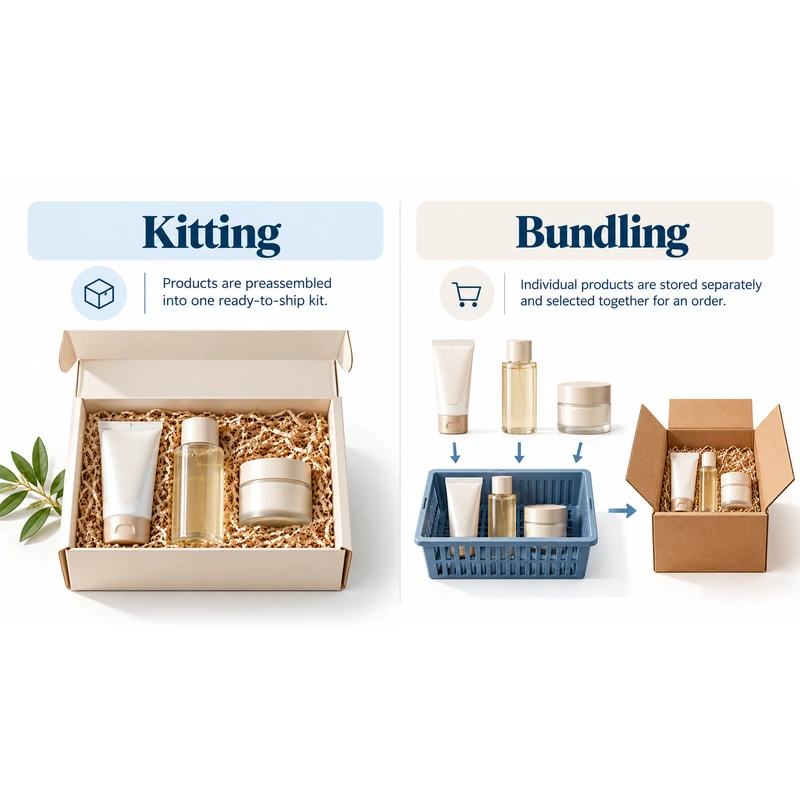
Kitting is the process of assembling individual products or components into a prepared set for fulfillment.
For example, a skincare brand might pack a cleanser, toner, moisturizer, and instruction card into a custom box. The completed kit can then be stored and shipped as one unit.
Kits can be assembled in advance (pre-kitting) or prepared after an order is received (on-demand kitting).
Product bundling, on the other hand, is a sales strategy that offers two or more products together as a single purchase.
Think of a store selling a shampoo and conditioner duo. Customers can buy both products through one listing, but the warehouse doesn’t necessarily need to package them together beforehand.
The items may remain in their usual storage locations until someone places an order. This is often referred to as virtual bundling when the products are grouped for sale without being physically preassembled.
The important distinction is that kitting focuses on how products are prepared, while bundling focuses on how they’re sold.
A product bundle can also be kitted, so the two approaches aren’t mutually exclusive.
Kitting vs. Bundling: Key Differences
Now that we’ve covered the basics, let’s look at how kitting and bundling work in practice.
The distinction becomes clearer when you compare how each approach affects product preparation, inventory, and order fulfillment.
Here’s a quick comparison:
| Feature | Kitting | Bundling |
| Main purpose | Prepare products as a set | Sell multiple products as one offer |
| Physical preparation | Products are grouped or assembled | Products may remain separate |
| Timing | Before orders or on demand | The offer is created before purchase |
| Inventory tracking | May use a separate kit SKU | May track individual component SKUs |
| Common examples | Gift boxes, subscription kits | Product pairs, promotional bundles |
| Flexibility | Depends on when kits are assembled | Product combinations can often be changed without preassembly |
How This Works in Real Ecommerce Orders
Consider a skincare brand selling a cleanser, serum, and moisturizer as a three-step routine.
For a holiday promotion, the brand might assemble all three products into a custom gift box with a printed insert. The finished set is stored as a kit and shipped whenever a customer places an order.
But the same brand could also sell those products as a bundle without preparing the boxes in advance. The warehouse would simply pick the individual items after receiving each order.
The difference becomes especially relevant when customers can choose their own products. A customizable skincare set may be easier to prepare on demand than to assemble in advance.
Supplement bundles offer another example.
A wellness store might sell several individually packaged supplements together as a daily routine bundle. The products could remain separate in storage and be picked together when ordered.
If the brand later introduces a ready-made gift set, those same products could be pre-kitted into a dedicated outer box.
For supplements, sellers also need to consider expiration dates, batch identification, labeling, and appropriate storage conditions when preparing these sets.
The right arrangement depends on the products, order volume, packaging requirements, and how much flexibility the business needs.
How Kitting and Bundling Affect Fulfillment Costs
Selling several products together may sound straightforward, but the preparation method can change what each order costs.
With pre-kitting, much of the work happens before customers place their orders. Products need to be collected, packaged, checked, and prepared for storage. This creates upfront labor and packaging costs, but once the kits are ready, fulfilling repeat orders may require fewer picking and packing steps.
On-demand bundling works differently.
Instead of assembling sets in advance, individual items remain available for other orders. This gives sellers more flexibility, especially when demand is uncertain. The trade-off is that each bundle order may require multiple picking steps and additional packing work.
Inventory is another factor worth considering.
Say you prepare 200 gift sets but sell only 60. The remaining products are tied up in completed kits, and changing the promotion or selling those items individually could mean unpacking them.
So, what should you look at when comparing the two approaches? Beyond the cost of the products themselves, consider:
- Assembly and packing labor
- Custom boxes, inserts, and protective materials
- Storage requirements
- Picking and handling charges
- Shipping weight and package dimensions
- Unsold kits and inventory flexibility
Neither kitting nor bundling is automatically the cheaper option. The total cost depends on your products, order volume, and fulfillment arrangements.
Choosing the Right Approach for Your Store
Cost is only part of the decision. How often your product combinations change matters just as much.
If you sell a fixed set regularly, pre-kitting may make sense. A subscription box containing the same products every month, for example, could be assembled in batches before the next fulfillment cycle.
But what if your store frequently changes its offers?
An accessories store might bundle a handbag with a matching wallet for one promotion, then offer a different combination the following month. Keeping the items separate until orders arrive makes it easier to adjust these offers without unpacking existing kits.
The same applies when customers can choose different sizes, scents, or colors, or when individual products also sell well on their own.
You don’t have to use one approach across your entire store. Pre-kitting can work for predictable sets, while on-demand bundling leaves more room for changing promotions and customer preferences.
What to Check Before Outsourcing Kitting and Bundling
Once you’ve chosen how to prepare your product sets, the next step is making sure your fulfillment partner can handle them correctly.
A few details are worth confirming before orders start coming in:
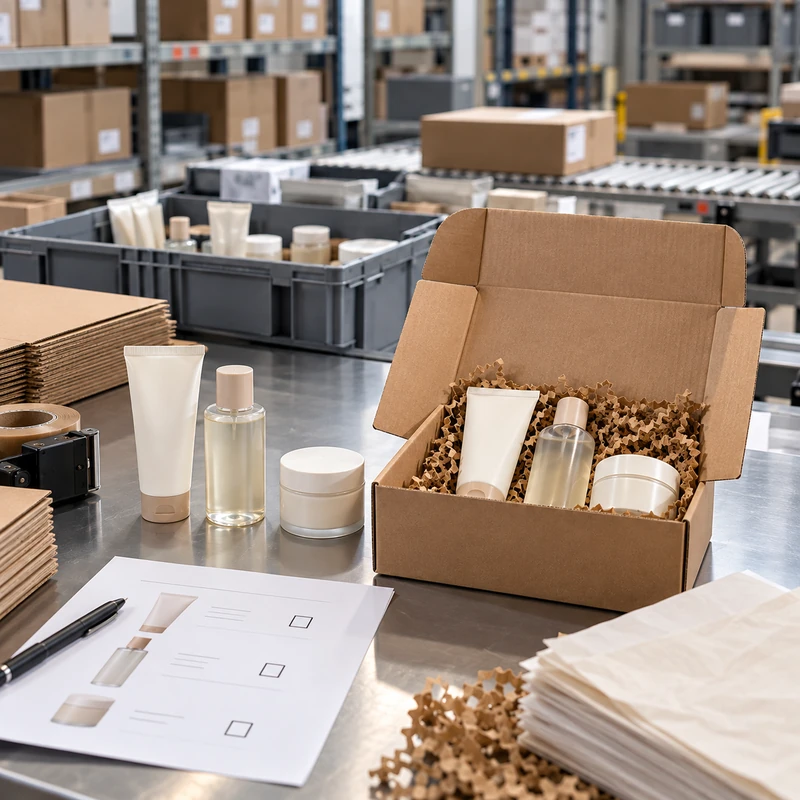
- Kit contents: Which SKUs and quantities belong in each set? Will the products be assembled in advance or picked after an order arrives?
- Packaging requirements: Are custom boxes, inserts, or protective materials needed? Who will supply them?
- Inventory tracking: How will individual products and completed kits be counted? What happens if one component runs out?
- Order verification: How will the warehouse check that every kit contains the correct items before shipping?
For example, if you sell a three-piece skincare set, the warehouse needs to know whether those products should arrive in a branded gift box or simply be packed together when ordered.
Getting these details right helps avoid confusion when order volumes increase.
Clear instructions and an agreed fulfillment process can make it easier to manage product sets as your store grows.
Final Thoughts
A product bundle may look simple on your storefront, but there’s more to consider behind the scenes.
Before launching a new set, make sure your inventory, packaging, and fulfillment arrangements can support it. A little planning upfront can help avoid unnecessary complications as orders grow.
Thinking about launching a product bundle or custom gift set? Contact GoShipFulfil to discuss your product and packaging requirements.