Selling through multiple channels can help an ecommerce business reach more customers.
A brand might have a Shopify store, sell on Amazon, and use TikTok Shop to attract new buyers. Each channel creates more sales opportunities, but it also creates more orders to manage.
What happens when the same product sells on three platforms at the same time? How do you keep inventory accurate and make sure every order reaches the right customer?
Omnichannel fulfillment connects inventory, order processing, warehousing, and delivery across multiple sales channels. It allows businesses to coordinate orders and inventory through a more connected fulfillment system instead of managing each channel separately.
Let’s look at how it works and why it matters as your ecommerce business grows.
What Is Omnichannel Fulfillment?
To understand how omnichannel fulfillment works, let’s first look at what it means and how it differs from multichannel selling.
Omnichannel fulfillment is the process of managing inventory and customer orders across multiple sales channels through a coordinated fulfillment operation.
These channels may include:
- A Shopify or other ecommerce website
- Online marketplaces such as Amazon
- Social commerce platforms such as TikTok Shop
- Physical retail stores
- Other online sales channels
The goal is to make sure products and orders can be managed across these channels without creating separate, disconnected processes.
For example, imagine a beauty brand selling skincare products through Shopify and Amazon.
A customer orders a moisturizer from Shopify. Another customer purchases the same product through Amazon.
With a coordinated fulfillment setup, both orders can be processed using shared inventory information. The warehouse can identify the orders, prepare the products, and arrange delivery according to the requirements of each channel.
This is different from simply having multiple sales channels.
Multichannel selling means offering products through multiple platforms. Omnichannel fulfillment goes a step further by coordinating inventory and order handling across those channels.
How Does Omnichannel Fulfillment Work?
Although the setup varies by business and fulfillment provider, most omnichannel operations follow four connected steps.
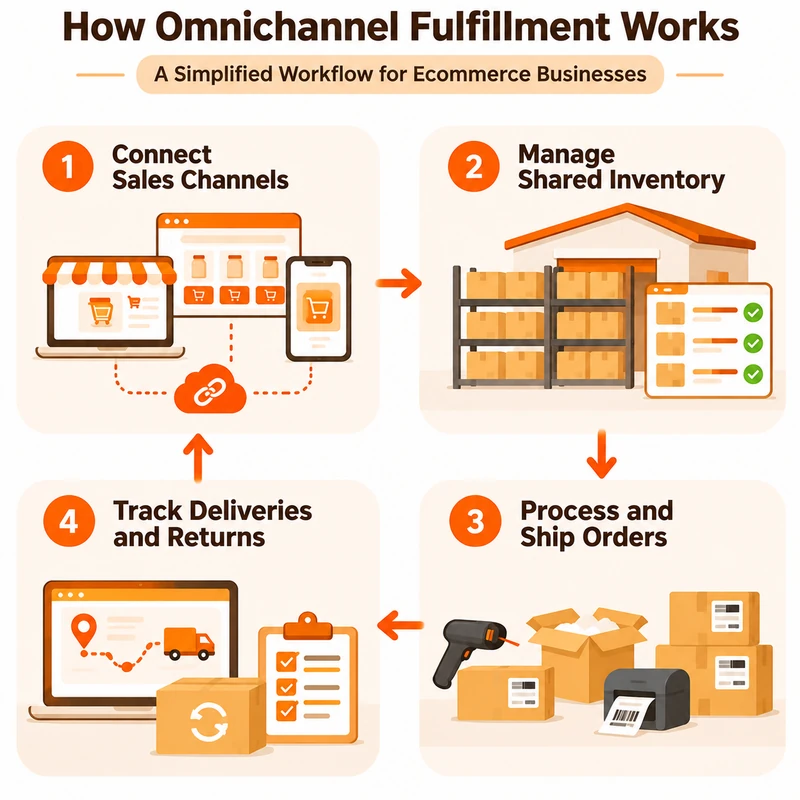
1. Connecting Sales Channels
The first step is bringing order information together.
A business may receive orders from Shopify, Amazon, TikTok Shop, and other platforms.
These orders need to reach the appropriate fulfillment system so they can be processed.
Some providers offer direct integrations with ecommerce platforms. Others may support API connections or manual order submission.
The important thing is that orders from different channels can be identified and handled correctly.
2. Managing Shared Inventory
Inventory management becomes more complicated when the same products are sold across multiple channels.
Without accurate stock information, a product may appear available on one platform even after the remaining inventory has been sold elsewhere.
This can lead to overselling and canceled orders.
A connected inventory system helps keep stock information updated across sales channels.
For example, if a store has 100 units of a skincare product and 15 are sold through Amazon, the available quantity should also be reflected in its other connected sales channels.
This depends on the inventory system and integration settings used by the business.
3. Processing and Shipping Orders
Once an order enters the fulfillment system, it needs to be prepared according to the relevant requirements.
This includes checking the product, picking the correct quantity, packing the order, and arranging shipment.
Different channels may have different requirements.
An Amazon order may need to follow specific marketplace shipping rules, while a Shopify order may use the brand’s preferred packaging.
The fulfillment operation needs to account for these differences without creating unnecessary delays.
4. Tracking Deliveries and Managing Returns
Fulfillment doesn’t end when a package leaves the warehouse.
Customers still need access to tracking information, and businesses need a way to handle delivery problems and returns.
For example, a customer may return a product purchased through Shopify, while another may request a refund through Amazon.
The return process should identify the original sales channel and follow the relevant return requirements.
Returned products may need inspection before they can be added back to available inventory.
A well-coordinated process helps businesses manage these activities without losing track of where products came from or what should happen next.
Why Is Omnichannel Fulfillment Important?
Connecting different sales channels is only part of the process. The real value comes from how these operations work together.
As a business adds more sales channels, disconnected operations can become harder to manage.
Omnichannel fulfillment helps address several common challenges.
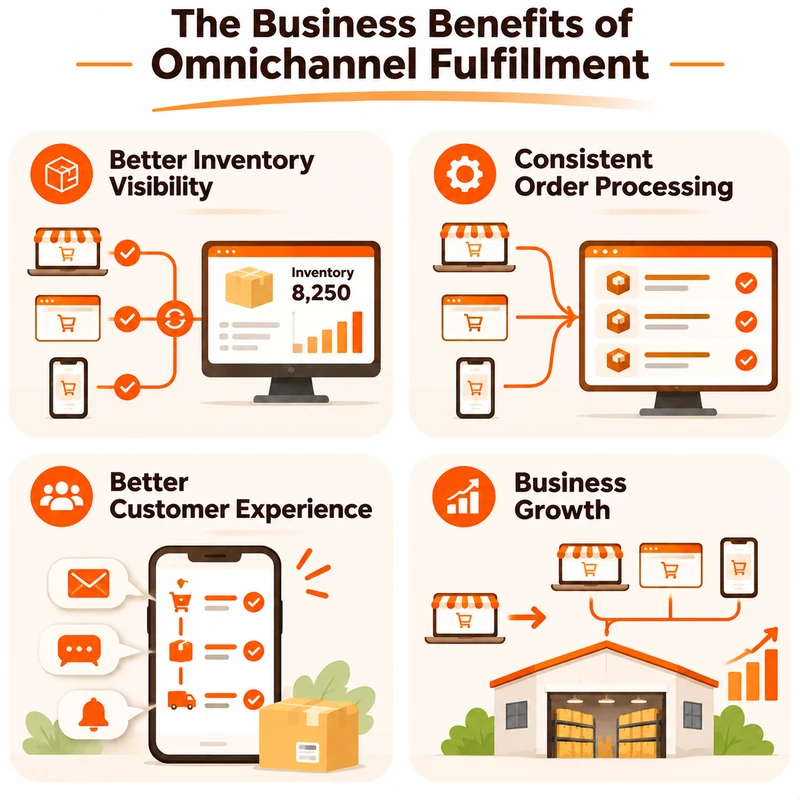
Better Inventory Visibility
When inventory information is connected, sellers can get a clearer picture of available stock across their sales channels.
This makes it easier to identify products that are selling quickly and avoid accepting orders for unavailable items.
It also supports better purchasing decisions.
More Consistent Order Processing
Managing orders separately across different platforms can create extra work.
A coordinated fulfillment setup helps bring these orders into a more organized process.
This can reduce manual tasks and make it easier to track orders from different channels.
A More Consistent Customer Experience
Customers may discover a brand on TikTok, purchase through its website, and contact customer service later about delivery.
They still expect clear product information and reliable order updates.
A connected fulfillment operation helps businesses maintain more consistent delivery and communication standards across channels.
Greater Flexibility as the Business Grows
A small store may initially manage orders from one platform without much difficulty.
But as it expands into marketplaces, social commerce, or physical retail, its operational needs change.
A more connected fulfillment setup can help support this growth without requiring every new channel to operate as a completely separate process.
Key Components of an Omnichannel Fulfillment Strategy
To make these benefits possible, businesses need more than connected sales platforms. Four key areas of their fulfillment operation also need to work together.
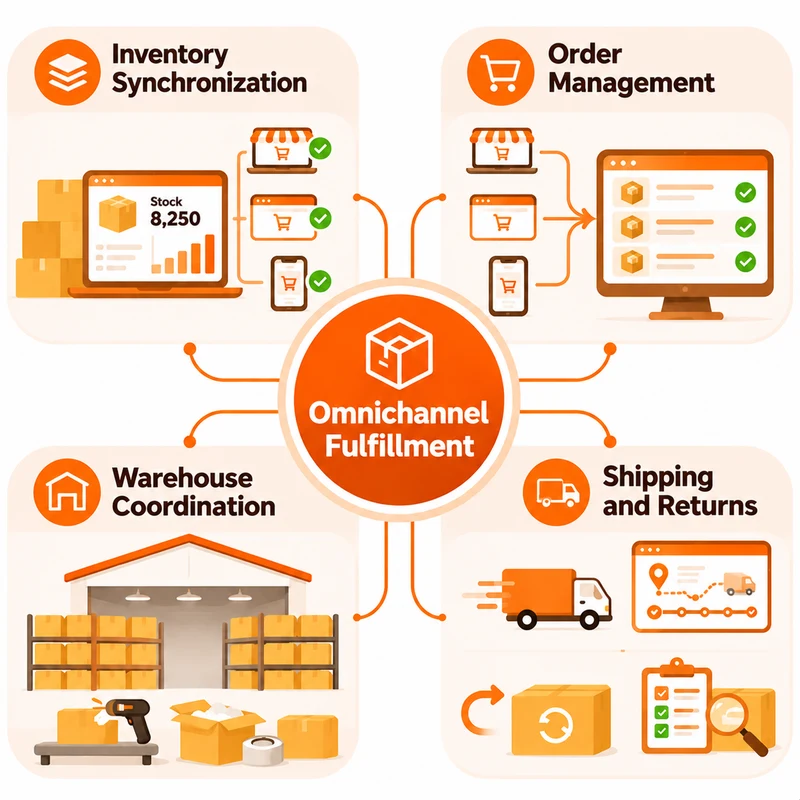
Inventory Synchronization
Inventory synchronization keeps stock information consistent across connected sales channels.
It helps prevent overselling and gives sellers a clearer view of available products.
Businesses should also account for reserved inventory, incoming stock, and products that are temporarily unavailable.
Order Management
A centralized order management system can collect orders from different platforms and help coordinate their processing.
For example, a Shopify order and an Amazon order may enter the same system while retaining their original order details and shipping requirements.
This makes order handling easier to organize.
Warehouse Coordination
Warehouse operations need to support orders from different channels.
This includes product storage, picking, packing, labeling, and dispatch.
Some businesses use one central warehouse, while others distribute inventory across multiple locations.
The right setup depends on sales volume, product size, target markets, and delivery requirements.
Shipping and Returns Management
Different sales channels may have different delivery expectations and return policies.
A fulfillment strategy should account for shipping methods, tracking updates, delivery exceptions, and returned inventory.
For example, a returned cosmetic product may need additional checks before it can be considered suitable for resale.
These requirements should be agreed upon before the business expands its fulfillment operation.
Common Omnichannel Fulfillment Challenges
Even with a coordinated fulfillment system, managing orders across multiple channels can still present some challenges.
Inventory discrepancies: If stock updates are delayed, different platforms may show different available quantities.
Different channel requirements: Marketplaces and independent stores may have different packaging, labeling, and shipping rules.
Multiple warehouse locations: Distributing inventory across several facilities can make stock planning more complicated.
Return management: Products purchased through different channels may follow different return processes.
Integration issues: Not every supplier or fulfillment provider supports every ecommerce platform. Some connections may require additional software or manual processes.
Understanding these limitations before expanding can help prevent operational problems later.
What to Look for in an Omnichannel Fulfillment Partner
Once you understand how omnichannel fulfillment works, the next step is finding a partner that can support your sales channels and operational needs.
Choosing a fulfillment partner requires more than checking its warehouse locations or advertised delivery speeds.
You should first understand whether its services match your sales channels and products.
Consider the following:
| What to Check | Why It Matters |
| Platform Integration | Can orders from your sales channels be received through direct integrations, API connections, or manual submission? |
| Inventory Management | How are stock levels updated and monitored? |
| Warehouse Operations | Can the provider handle different order and packaging requirements? |
| Shipping Options | Are suitable shipping methods available for your target markets? |
| Returns Support | How are returned products checked and processed? |
| Communication | How are stock changes, delays, and order issues reported? |
Also consider how your sourcing and fulfillment arrangements work together.
For businesses sourcing products from China, GoShipFulfil can be a partner to discuss product sourcing, packaging, inventory arrangements, and cross-border order fulfillment.
The actual workflow depends on the products, sales channels, order volume, and destination markets involved. Available integrations and order submission methods should be confirmed before starting.
Final Thoughts
Omnichannel fulfillment helps ecommerce businesses connect the operations behind multiple sales channels.
It brings inventory, order processing, warehousing, shipping, and returns into a more coordinated system.
However, adding more sales channels doesn’t automatically make a business more efficient. The supporting operations need to work together.
Before expanding into new platforms, review how your products, inventory, and orders will be managed.
A suitable fulfillment arrangement should make it easier to serve customers across channels without making everyday operations unnecessarily complicated.