
Selling perfume online sounds pretty straightforward. Find a supplier, list a few fragrances in your store, and have someone else ship the orders.
And there’s a market worth exploring. According to Circana, fragrance sales in the U.S. mass market grew 15% in 2025.
But perfume isn’t quite like selling T-shirts or phone cases.
Customers can’t smell a fragrance before buying it, glass bottles need careful packaging, and alcohol-based perfumes can be subject to shipping restrictions that don’t apply to ordinary ecommerce products.
So, can you actually build a perfume dropshipping business?
Yes, it’s possible. But getting started means thinking beyond product selection, from finding a reliable supplier to understanding how your fragrances can be shipped.
Before getting into suppliers and shipping requirements, it helps to understand how perfume dropshipping actually works.
What Is Perfume Dropshipping?
Perfume dropshipping is a business model where you sell fragrances online without having to store the products yourself.
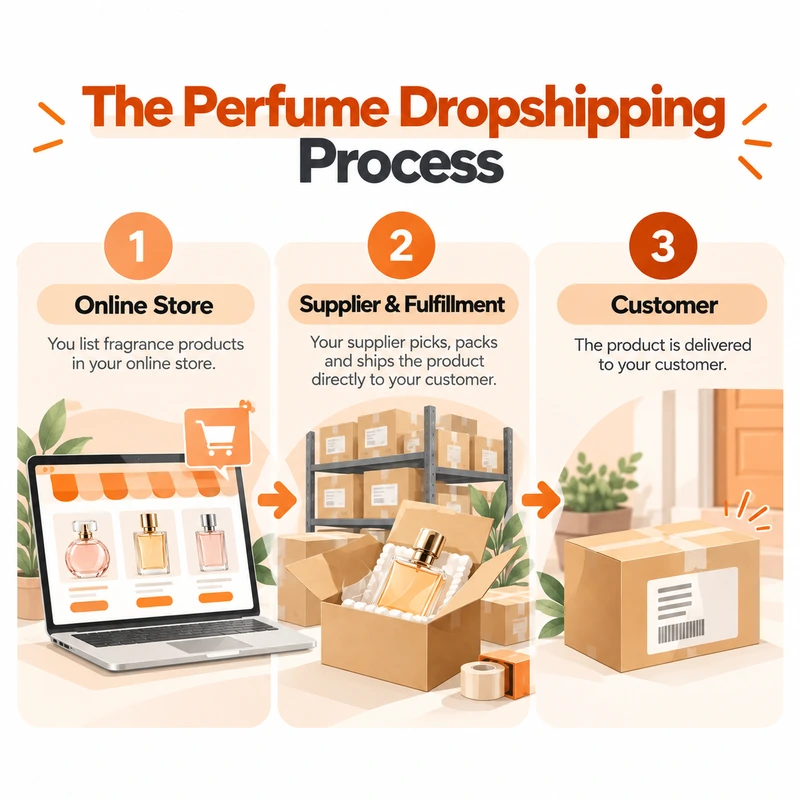
When a customer places an order, the order details are sent to your supplier or fulfillment partner, who prepares and ships the product directly to the customer.
You handle the storefront, product listings, pricing, marketing, and customer service.
There are a few different ways to approach perfume dropshipping:
Branded perfume resale: Selling genuine fragrances from established brands through suppliers with legitimate sources and the necessary resale permissions.
Independent fragrances: Working with smaller fragrance brands or suppliers that offer their own products.
Private label perfume: Selling fragrances under your own brand, often using existing formulas with custom labels or packaging. Some suppliers may also offer fragrance development.
Each approach comes with different costs, supplier requirements, and responsibilities. Private label perfume, for example, may require an upfront investment or minimum order quantities, even if a third party handles shipping individual customer orders.
How to Start Perfume Dropshipping
Before spending heavily on marketing, make sure you’ve chosen the right products, found a dependable supplier, and worked out how orders will reach your customers.
1. Choose Your Perfume Niche
Start with the type of fragrances you want to sell and the customers you want to reach.
You could focus on everyday perfumes, gift sets, independent fragrance brands, or a particular scent family.
A smaller, well-defined collection is often easier to market than a large catalog of unrelated products.
Think about why someone would choose your store. Are they looking for an affordable everyday scent, a special gift, or a fragrance they can’t easily find elsewhere?
Your answer will help shape your product selection, supplier search, and store positioning.
2. Find Reliable Perfume Dropshipping Suppliers
A good-looking product catalog doesn’t tell you much about how a supplier handles real orders.
Before adding products to your store, check where they come from, how inventory is managed, and what support is available when something goes wrong.
Ask potential suppliers:
- Can you provide documentation showing where the perfumes come from?
- Can I order samples before listing the products?
- How often do you update stock availability?
- What happens when a product sells out?
- How do you handle damaged products, missing orders, and returns?
If you’re reselling branded fragrances, check product authenticity and any applicable resale permissions. Also confirm that you can use the brand’s product images and marketing materials.
For private label perfumes, ask about available formulas, labeling options, minimum order quantities, and any upfront costs.
Once you’ve shortlisted a supplier, the next step is to see how the products hold up in person.
3. Check Product Quality and Packaging
Start with the bottle, cap, atomizer, seal, and label. Check for leaks, make sure the spray mechanism works, and see whether the packaging keeps the bottle secure during delivery.
Examine the bottle, cap, atomizer, seal, and label. Check whether the fragrance matches the supplier’s description and whether the packaging keeps the bottle secure during delivery.
For gift sets or premium fragrances, presentation deserves extra attention. A damaged box can affect the customer experience even when the perfume inside is intact.
If you’re selling private label products, confirm that the ingredients, labeling, and packaging meet the requirements of your target markets.
4. Build Your Store and Product Listings
Selling fragrance online means helping customers imagine a scent they haven’t experienced.
Instead of relying on vague descriptions like “luxurious and irresistible,” explain what the perfume actually smells like.
Include useful details such as:
- Fragrance notes: Top, middle, and base notes, where available.
- Scent family: Floral, woody, citrus, fresh, or another appropriate category.
- Product details: Bottle size, concentration, and relevant ingredient or labeling information.
Clear photos of the bottle, packaging, and available sizes also help customers understand what they’re ordering.
Make sure your descriptions match the actual products. If you’re selling established brands, avoid suggesting an official relationship unless you have one.
5. Confirm Shipping and Fulfillment Arrangements
Before launching, check whether your chosen perfumes can actually be shipped to your target customers.
Alcohol-based fragrances may be subject to dangerous goods requirements, and not every carrier or shipping service accepts them.
Ask your supplier or fulfillment partner to confirm which shipping routes are available for each product. This should include any applicable documentation, packaging, labeling, and carrier requirements.
Also find out how orders are packed, how tracking is shared, and what happens if a parcel is delayed, damaged, or rejected.
If you’re selling internationally, check the requirements for each destination rather than assuming one shipping arrangement works everywhere.
Perfume Dropshipping Costs to Consider
Once you’ve worked out how to source and ship your perfumes, the next question is whether the numbers make sense.
The difference between your selling price and the supplier’s price isn’t your final profit. There are several other costs to account for.
| Cost | What to Consider |
| Product | Supplier price per bottle or set |
| Packaging | Protective materials, boxes, and custom packaging |
| Shipping | Delivery charges and any special-handling fees |
| Store and payment fees | Ecommerce platform and transaction fees |
| Marketing | Advertising, content creation, and promotions |
| Returns and damage | Refunds, replacements, and damaged products |
For example, suppose you sell a perfume for $45. The product costs $20, shipping is $8, packaging adds $2, and payment processing costs another $2.
That leaves $13 per order before advertising, returns, taxes, and other business expenses.
It’s a simplified example, but it shows how quickly costs can add up. A perfume with an attractive markup may still leave little room for customer acquisition.
Before setting your prices, use actual supplier and shipping quotes to work out how much you can afford to spend on each sale.
What to Check Before Shipping Perfume Internationally
A workable shipping price doesn’t always mean a workable shipping route. Perfume can face transport restrictions that ordinary ecommerce products don’t.
Many alcohol-based perfumes are classified as flammable liquids for transport. Depending on the product and shipping route, this can mean restrictions on air transport, additional packaging requirements, special markings, or fewer carrier options.
For example, USPS prohibits international mailing of alcohol-containing perfume. Within the United States, eligible perfume shipments can generally travel by ground under specified conditions. Domestic air shipping requires prior written authorization.
Other carriers have their own acceptance rules, so USPS restrictions shouldn’t be treated as universal.
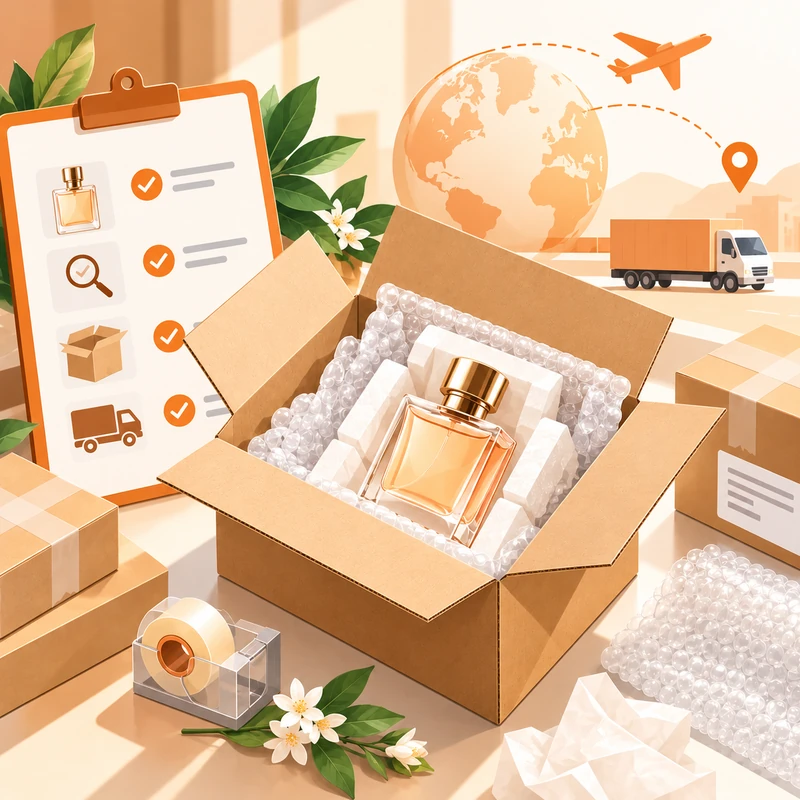
Before shipping perfume internationally, check these five things:
- Product classification: Does the fragrance’s formulation and safety documentation identify any transport restrictions?
- Carrier acceptance: Will the carrier accept this particular perfume on the intended route?
- Packaging and labeling: What protective packaging, markings, and shipping documents are required?
- Destination requirements: Are there import restrictions or product labeling rules in the destination country?
- Returns: Can the perfume be shipped back if a customer requests a return?
Alcohol-free perfumes may have different requirements, but that doesn’t automatically make them unrestricted. The actual formulation still matters.
If your supplier can’t explain how a perfume will reach your customer, get that sorted out before adding it to your store.
Final Thoughts
Perfume dropshipping offers a way to enter the fragrance market without managing your own warehouse, but it’s worth checking the details before committing to a product.
A fragrance that looks promising on your storefront still needs to meet customer expectations, leave enough room for profit, and reach buyers without shipping problems.
If you’re exploring fragrance sourcing, packaging, or fulfillment, GoShipFulfil is a place to discuss your product requirements and explore available options. Shipping arrangements will depend on the specific fragrance and destination.
Frequently Asked Questions
Can I Dropship Branded Perfumes?
Yes, but make sure you’re sourcing genuine products through legitimate suppliers. Check any applicable resale restrictions and confirm whether you have permission to use the brand’s images and marketing materials. Selling counterfeit fragrances or presenting yourself as an authorized retailer without permission can create serious problems.
Can I Start a Private Label Perfume Business Without Holding Inventory?
It’s possible to have a third party store and fulfill your private label perfume orders. However, private label suppliers may require minimum order quantities, upfront purchases, or development fees.
That means you might avoid storing products yourself while still needing to purchase inventory in advance. Confirm these terms before choosing a supplier.
How Do Returns Work for Perfume Dropshipping?
Return arrangements depend on your supplier’s policies, the product’s condition, and applicable consumer protection laws.
Opened or used fragrances may be difficult to resell, while damaged or leaking bottles may require refunds or replacements. International returns can be more complicated if the perfume is subject to transport restrictions.
Agree on who handles refunds, replacements, and return shipping costs before you start taking orders.
Sources
Circana — U.S. Prestige and Mass Beauty Retail Deliver a Positive Performance in 2025 (February 2026)