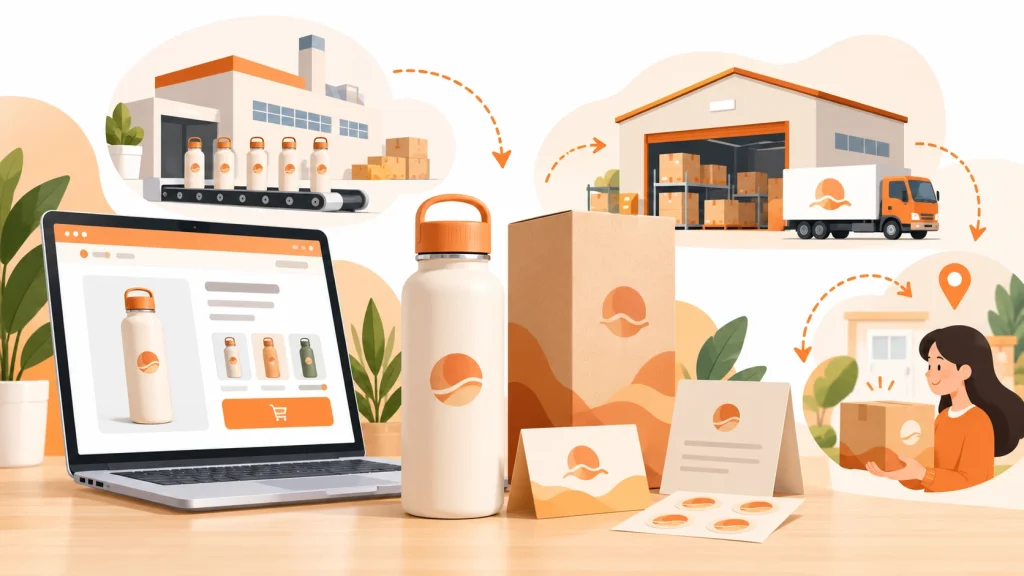
Two online stores sell the same product at nearly the same price.
One blends in with dozens of competitors. The other builds a brand customers recognize.
What’s the difference?
It might be something as simple as a name, a distinctive package, or the experience customers have when their order arrives.
That’s the idea behind private label dropshipping. You sell products under your own brand while a supplier or fulfillment partner handles storage, packing, and shipping.
But putting your logo on a product is only part of the process. You’ll also need to choose the right products, find reliable suppliers, and work out how orders will reach your customers.
What Is Private Label Dropshipping?
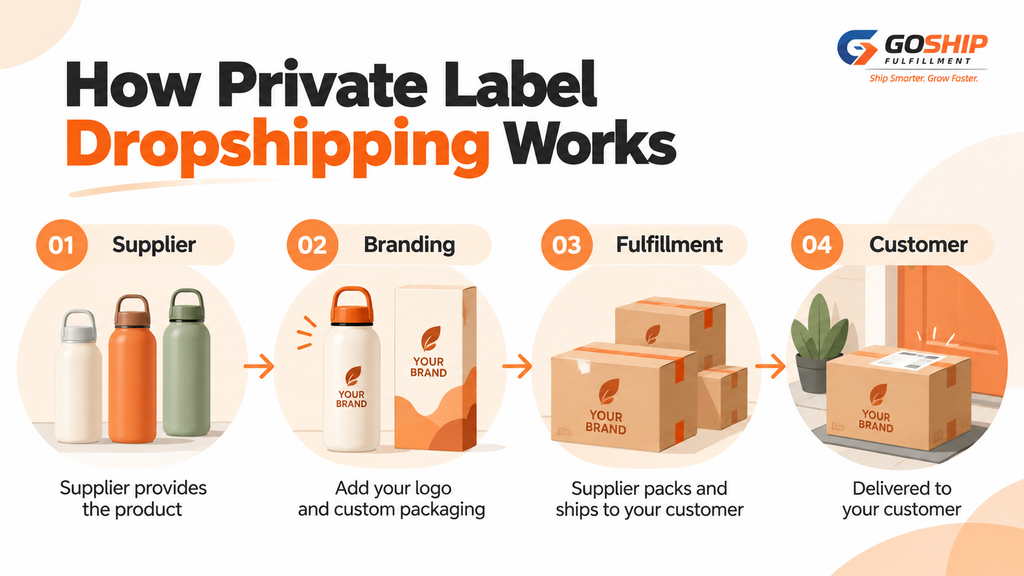
Private label dropshipping lets you sell products manufactured by a third party under your own brand, without handling each customer shipment yourself.
You control your storefront, pricing, marketing, and customer relationships. Your supplier or fulfillment partner takes care of the agreed production, storage, packing, and shipping tasks.
Say you’re selling reusable water bottles online. Rather than offering the same generic bottles as other stores, you work with a supplier to add your logo and create custom packaging. When a customer orders, your fulfillment partner ships the branded bottle directly to them.
You don’t need your own factory or warehouse to make this work.
There’s one important catch, though: private label doesn’t always mean zero upfront inventory costs. Some suppliers require minimum order quantities (MOQs) for customized products or packaging, even if orders are shipped individually.
You may need to purchase a batch of branded products before making your first sale.
Now that you know how private label dropshipping works, it’s worth looking at a few similar terms that can be easy to confuse.
Private Label vs. White Label vs. Regular Dropshipping
Private label and white label mainly refer to how products are branded and customized, while dropshipping describes how orders are fulfilled.
| Model | Branding | Customization | Fulfillment |
| Regular Dropshipping | Usually generic or supplier-branded | Limited | Supplier ships orders |
| White Label | Your brand on an existing product | Usually limited to branding and packaging | Varies by supplier |
| Private Label | Products sold under your brand | May include product specifications or packaging | Varies by arrangement |
| Private Label Dropshipping | Your brand on supplier-made products | Depends on supplier capabilities | Supplier or fulfillment partner ships orders |
In practice, the line between white label and private label isn’t always clear. Some suppliers use both terms for products that simply receive a new logo or custom packaging.
What matters is what you’re actually getting. Can you change the product, or just the packaging? Is the design exclusive to your brand, or can other sellers offer the same item?
It’s worth confirming these details before committing to a supplier.
How to Start Private Label Dropshipping
You don’t need to create an entirely new product to start a private label business. Many sellers begin with an existing product, research demand, and gradually add their own branding.
If you’re still testing your first product, keep customization simple until you have a better idea of what customers actually want.
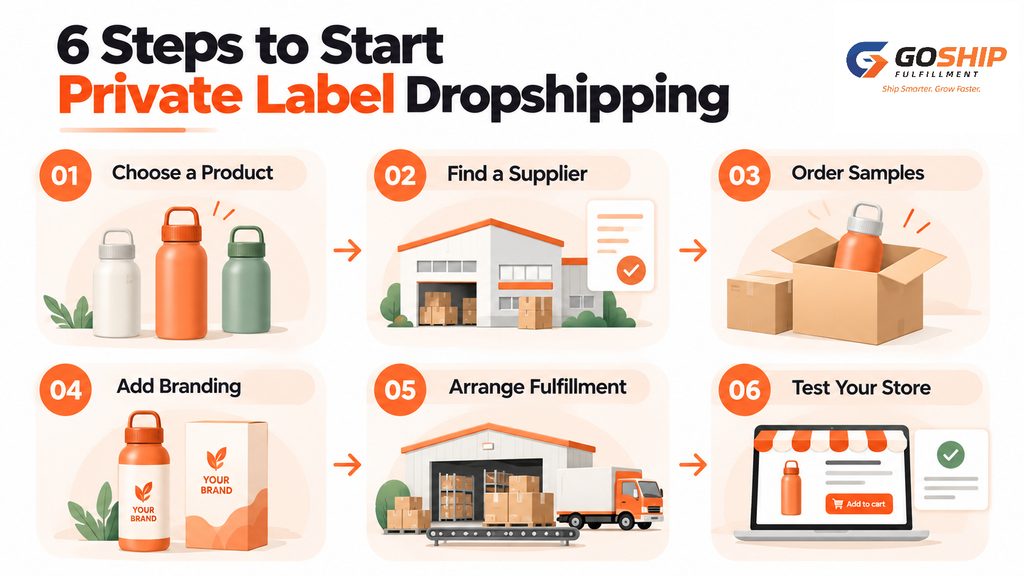
1. Choose a Product Worth Branding
Start with a specific audience in mind rather than chasing every trending product.
For example, a travel accessories store might focus on packing cubes, reusable bottles, and luggage organizers with a consistent design style.
Before reaching out to suppliers, ask yourself:
- Who would buy this product, and why?
- What are competing stores already offering?
- What complaints keep appearing in customer reviews?
- Could better design, packaging, or accessories make it stand out?
Shipping matters, too. Lightweight, durable products are generally easier to handle than fragile or oversized items. Some products may also face additional shipping restrictions.
2. Find Suppliers That Support Your Branding Requirements
Not every dropshipping supplier supports private labeling, and customization options can vary. Some only offer logo printing, while others can help with custom packaging, colors, or product specifications.
Before requesting quotes, prepare a product brief covering your specifications, estimated order quantities, target markets, and branding requirements. This makes it easier to compare what different suppliers can actually provide.
Check how minimum order quantities (MOQs) are calculated, particularly for different product variants and custom packaging. Some suppliers also require upfront purchases, even when they ship customer orders individually.
You’ll also want to know who owns any prepaid inventory, where it’s stored, and what happens to unsold stock if you discontinue the product.
Pay attention to how suppliers communicate during the quotation process. Are they clear about what they can and can’t offer? It’s also worth asking how they handle defective products, incorrect items, and returns.
Clear answers about limitations and potential problems can tell you more about a supplier than a quick promise to meet every request.
3. Order Samples Before Finalizing Your Brand
A product can look excellent in supplier photos and still disappoint when it arrives.
Before committing to a larger order, get samples to check the materials, finish, dimensions, and whether the product matches the supplier’s specifications.
If you’re planning custom packaging, ask for a sample of that as well. Check the logo placement, print quality, and label details. The packaging should also protect the product during shipping, not just look good in photos.
Where possible, have a sample shipped using the same packaging and delivery method your customers will receive. This can reveal problems you might miss when inspecting the product alone.
Once you’re satisfied, confirm the approved specifications with your supplier before moving into production.
4. Start With Simple Branding
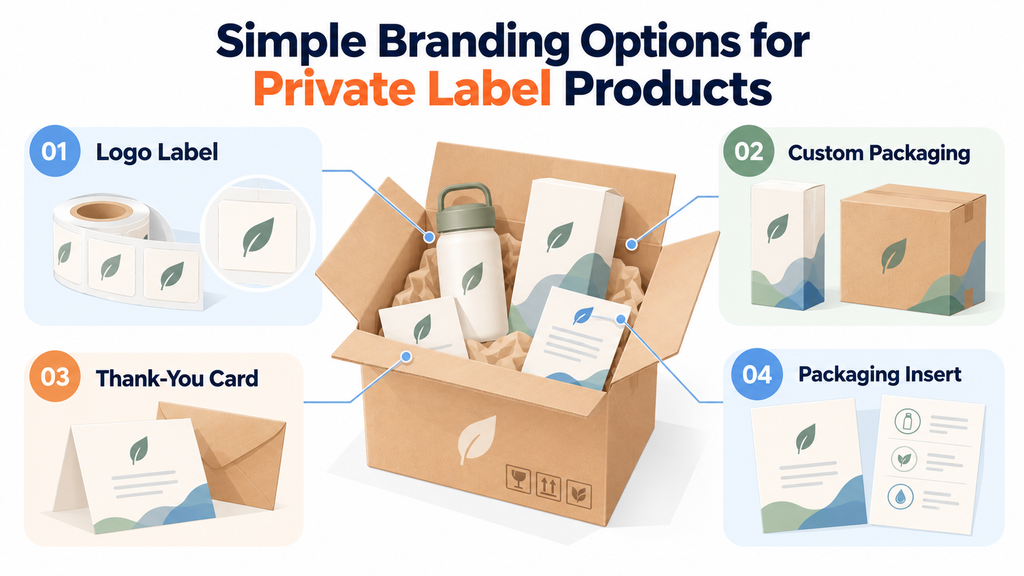
You don’t need elaborate packaging to begin building a recognizable brand.
Depending on what your supplier or fulfillment partner offers, you might start with a branded sticker, product label, thank-you card, or packaging insert.
Think about what each detail adds to the customer experience. A care card, for example, can explain how to use or maintain the product, while a simple insert can introduce your brand and provide contact information for customer support.
More distinctive packaging can come later, once you’ve found a design that works for your products and customers.
Before finalizing a design, make sure your branding materials are suitable for the product and can be included in your fulfillment process.
5. Connect Branding With Order Fulfillment
Your branded products are ready. Now you need a reliable way to get each order to your customers.
Some suppliers handle manufacturing but leave storage and shipping to a separate fulfillment partner. Others may coordinate several parts of the process.
Before launching, find out where your products and branded packaging will be stored, how customer orders will be received and processed, and who will handle packing and shipping. Tracking information should also flow back to your store so customers can follow their deliveries.
For sellers working with multiple suppliers, coordinating these steps can become more complicated. GoShipFulfil, for example, supports ecommerce businesses with product sourcing, packaging coordination, and order fulfillment, helping connect supplier operations with customer deliveries.
6. Set Up Your Store and Test an Order
Once your products and fulfillment arrangements are in place, it’s time to prepare your online store.
Create product pages with accurate descriptions, clear photos, and realistic delivery estimates. Set your prices based on product costs, packaging, shipping, and other expenses.
Before accepting customer orders, place a test order through your store. Check whether the order reaches your fulfillment partner correctly, the right packaging is used, and tracking details are returned.
A test order can help you catch problems before they affect paying customers.
How Much Does Private Label Dropshipping Cost?
Starting a private label dropshipping business doesn’t come with a fixed price tag. Your initial investment depends largely on the product, how much customization you need, and your supplier’s requirements.
Compared with regular dropshipping, private labeling may involve additional upfront costs for branded packaging, product customization, or minimum inventory purchases.
You’ll also need to budget for samples, store setup, shipping, and ongoing order fulfillment.
Before committing to a supplier, look beyond the product’s unit price. Ask for a breakdown of one-time setup costs and per-order charges, including packaging, storage, and delivery.
Final Thoughts
Building a private label dropshipping brand involves more than choosing a product and adding your logo. Product quality, supplier communication, and reliable fulfillment all play a part in the customer experience.
Start with a product that fits your audience, check samples carefully, and understand the costs before committing to larger orders.
If you’re exploring private label dropshipping, GoShipFulfil can help with product sourcing, packaging coordination, and order fulfillment. Share your product requirements and target markets to discuss your options.