
The product sample arrives, and everything looks right. The color matches. The material feels good. The product works as expected.
So you approve it and place a bulk order.
A few weeks later, the finished products arrive. Some have a different finish. Others feel lighter or don’t work quite as well as the original sample.
What happened?
A good sample doesn’t guarantee a good bulk order. When production moves to a larger scale, materials, production conditions, and product quality can vary.
The sample shows what a supplier can make. It doesn’t always show what every finished unit will be like.
That’s why sampling should be about more than checking one product. It should help you set clear standards for the supplier to follow during production.
What Is Product Sampling in Product Sourcing?
Before we look at what can go wrong in bulk production, let’s cover what product sampling actually is.
Product sampling means getting a real product from a supplier before you place a bigger order.
It lets you check the product’s look, materials, size, and function.
But not all samples are used for the same purpose.
| Sample Type | What It Helps You Check |
| Stock sample | The supplier’s existing product quality |
| Pre-production sample | The final product version before bulk manufacturing |
| Golden sample | The approved product used as a reference for production |
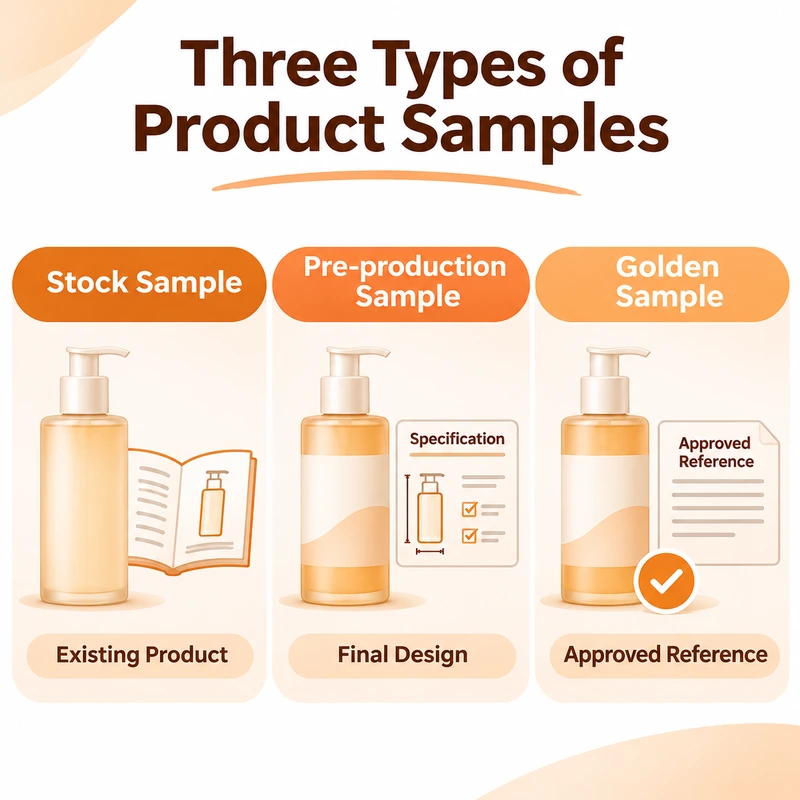
A stock sample might help you decide whether a supplier’s product is worth considering.
A pre-production sample is more specific. It should reflect the materials, design, and production methods planned for your order.
Once you approve a suitable sample and mark it as the reference, it can become the golden sample.
The key is to know what you are approving. A sample from a supplier’s showroom isn’t necessarily the same as a product made under normal factory conditions.
Why Can Bulk Products Differ from Approved Samples?
There are a few reasons why a bulk order may not match the sample you approved.
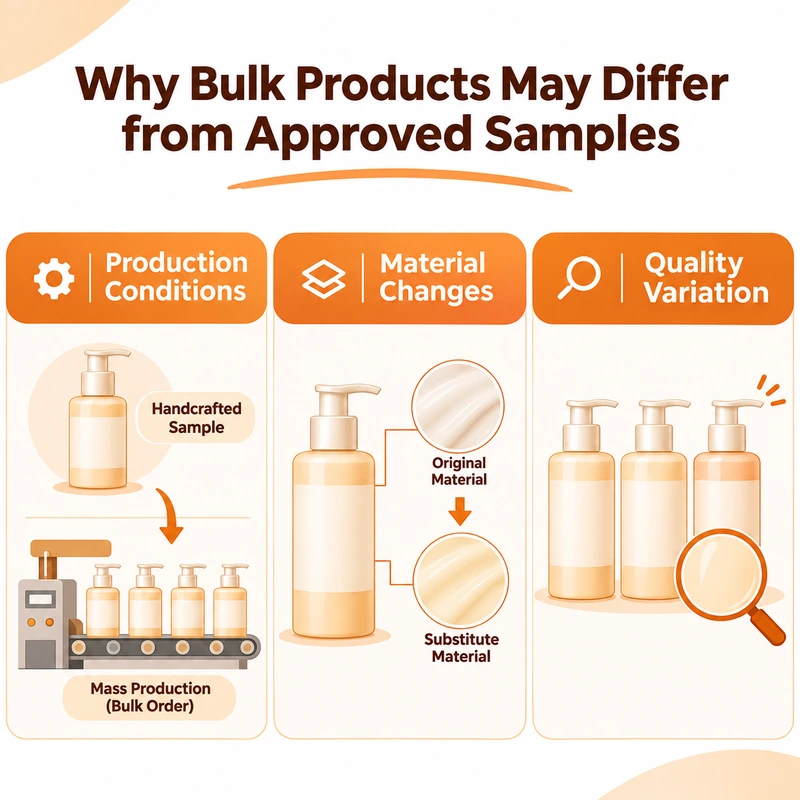
Samples May Be Made Under Different Conditions
Some samples receive extra attention during development.
A supplier might make one by hand, tweak individual parts, or spend more time on the finish.
Bulk production works differently. The factory has to make many units with its standard equipment and production team.
Take a leather bag, for example. The sample may have neat, even stitching because someone sewed it by hand. In bulk production, the factory will likely use standard sewing machines and settings.
If those settings aren’t properly controlled, the stitching may look different.
This doesn’t mean the supplier deliberately provided a misleading sample. It means the sample may not fully represent the normal production process.
Materials and Components May Change
A sample may use one material, while the final order uses another.
Sometimes the supplier can’t get the original material anymore. Other times, they replace a part without checking with you first.
Here’s an example. You approve a desk lamp with a solid metal base. Then the supplier switches to a lighter base. The lamp looks almost the same, but it feels less stable.
Even a small change like this can affect how customers use and experience the product.
That’s why material requirements should be confirmed before production starts.
Small Differences Become More Visible at Scale
A few samples passing your checks doesn’t mean every unit in a bulk order will meet the same standard.
Say you test three wireless chargers. All three work well.
That’s a good sign. But it doesn’t tell you how the next 2,000 units will perform.
During production, machine settings, material quality, and assembly quality can vary. Because of this, some finished products may have defects.
You can’t expect every unit to look exactly the same. What you can do is decide which differences are acceptable and which are not.
How to Turn an Approved Sample into a Production Standard
So how do you make sure the supplier knows what to follow during production?
Saying “the sample looks good” isn’t enough.
You need to do three things. Write down the product specifications. Keep an approved reference sample. Agree on which differences are acceptable.
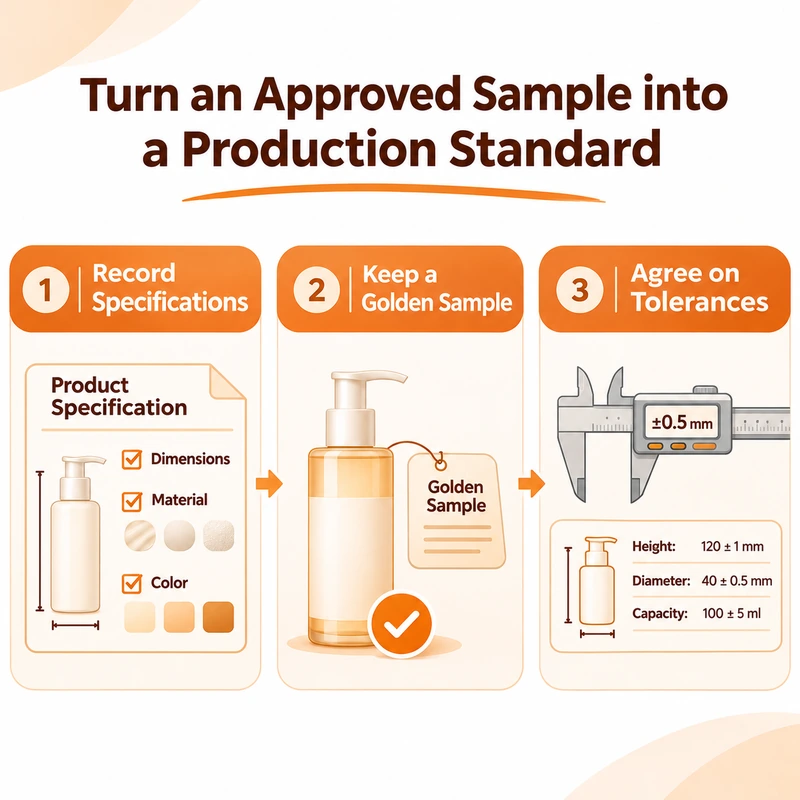
Record What You Actually Approved
Start by writing down the product details that matter.
These may include:
- Size and dimensions:The required measurements and acceptable differences.
- Materials: The type, grade, or other material details you agreed on.
- Color and finish: What the product should look like and how the surface should feel.
- Function: What the product has to do and how well it should do it.
- Packaging: The box, labels, accessories, and protective materials.
For example, saying a water bottle should be “lightweight and durable” leaves room for different interpretations.
It’s better to specify the material, capacity, dimensions, and any required performance tests.
The same goes for color. “Dark green” can mean different things to different people. An agreed color reference and physical sample make the requirement clearer.Clear specifications help both sides work toward the same result.
Keep an Approved Reference Sample
Once you approve the final sample, keep it as your golden sample.
Label it with the product name, version, and approval date. If possible, you and the supplier should each keep a matching approved sample.
Also save photos and written specifications with the approval record.
For example, say you approve a certain fabric texture. The supplier can look at the physical sample during production.
Later, an inspector can use the same sample to check the finished products.
A golden sample helps because some details are hard to explain in words.
But it doesn’t replace written specifications. A sample can show the right color or finish. It can’t explain every measurement, test, or production condition.
Agree on What Counts as an Acceptable Difference
Not every small difference is a defect. Some variation is normal in manufacturing. What matters is whether it stays within the limits you and the supplier agreed on.
These limits are often called tolerances.
For example, say a product should be 20 cm long, with a tolerance of ±1 mm. Anything between 19.9 cm and 20.1 cm meets the requirement.
But changing the approved material without permission is a different issue. The product may look similar, but it may no longer meet the agreed specs.
Agree on these limits before production starts. This helps avoid confusion when it’s time to inspect the finished order.
What Should Happen After Sample Approval?
Once the sample is approved, the next step is to check the products during production. Do they meet the agreed standards?
One useful checkpoint is the start of the production run.
Compare the first finished units with the approved sample and your written specs. Is the color, size, or function already off? If so, it’s easier to fix before more units are made.
Another checkpoint comes before shipment.
Inspect the finished products against the agreed requirements. Depending on the product and order, you may do visual checks. You may also do measurements and function tests.
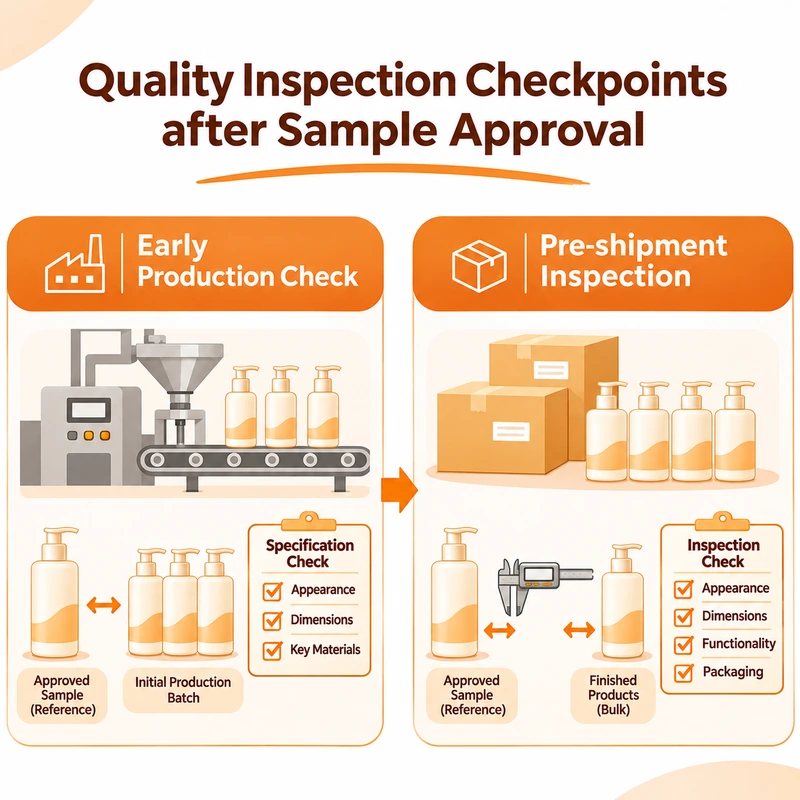
Take a travel bag, for example. Say you approved a specific zipper. Checking how it looks isn’t enough. You also need to make sure it opens and closes properly.
Agree on the inspection method and the number of units to check in advance.
If you work with a sourcing partner like GoShipFulfil, you can talk through sample requirements and quality checks during sourcing. Clear sample records make it easier to explain what needs to be checked. This helps before production and before shipment.
When Should You Request a New Sample?
So what if something changes after you’ve approved the sample?
If the product changes, the old sample may not be a good reference anymore.
You may need a new sample if the product changes a lot. Maybe the design is new. Maybe the materials or parts are different. Or maybe it’s made in a different way.
Here’s an example. You signed off on a skincare bottle with a regular cap. Then you decide to use a pump instead.
The formula may stay the same. The bottle may stay the same. But you still need to check two things. Does the new pump fit? Does it work well?
Packaging changes matter too.
A new gift box may look better on your product page. But it may not protect the product well during shipping.
Check these changes before production starts. Then update your approved reference if needed.
Final Thoughts
Approving a sample is only half the job. What you do next matters just as much.
Write down clear specs, keep the approved sample, and agree on quality checks before production begins.
Before placing a bulk order, you need to make sure your supplier knows exactly what you signed off on. Just as important, make sure they know what can’t change.
This small step can save you from much bigger problems later.