More products, more suppliers, more choices—but not necessarily easier decisions.
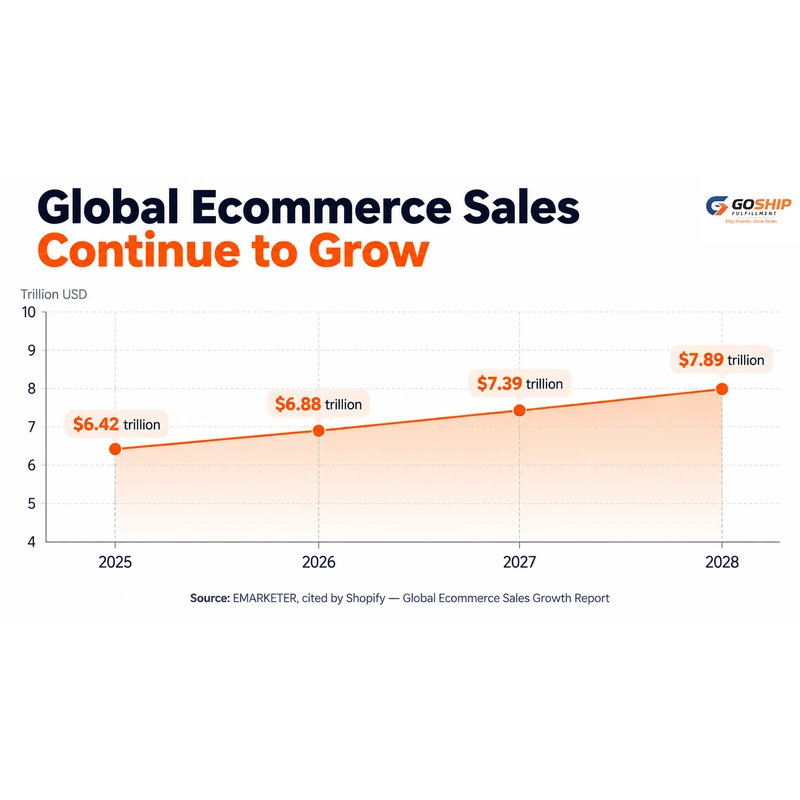
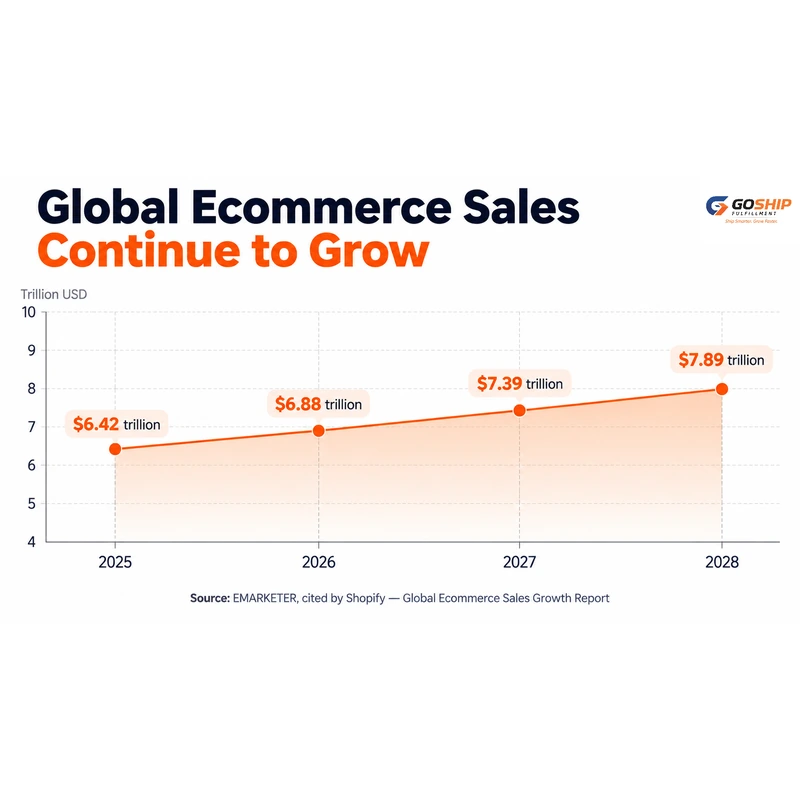
With global ecommerce sales expected to reach $7.89 trillion by 2028, finding something to sell is rarely the hardest part. Finding the right supplier at the right cost often is.
That is where product sourcing comes in.
What Is Product Sourcing?
Product sourcing is the process of finding and acquiring products from suppliers for your business.
For an ecommerce seller, this typically involves identifying potential products, finding suppliers that can provide them, comparing options, reviewing samples and agreeing on purchasing terms.
The supplier could be a manufacturer, wholesaler, distributor or another type of product provider.
A sourcing decision usually involves several questions:
- Does the product match your requirements?
- What is the minimum order quantity (MOQ)?
- How much will the product actually cost?
- How long will production or preparation take?
- Can the supplier maintain consistent requirements as orders grow?
- What happens if something goes wrong?
This is why product sourcing is more than searching a marketplace and choosing the cheapest listing.
Common Product Sourcing Methods
There is no single sourcing model that works for every ecommerce business.
Wholesale
Wholesale sourcing involves purchasing existing products, usually in larger quantities, and reselling them through your store.
It can be relatively straightforward because the product already exists, but you may have less control over customization.
Manufacturing or private label
Working with a manufacturer gives you more opportunities to define specifications, materials, packaging or branding.
That extra control also means more decisions around samples, MOQs, production requirements and quality expectations.
Dropshipping
With dropshipping, sellers do not typically purchase and hold inventory before customers place orders. Orders are instead fulfilled by a supplier or fulfillment partner after a sale is made.
This can reduce inventory commitment when testing products, although sellers still need to evaluate product quality, supplier reliability, costs and the customer delivery experience.
The right model depends on what you sell, how much control you need and how you plan to fulfill customer orders.
How We Source Products for Your Ecommerce Business
Our sourcing process starts with what you need and moves through supplier search, comparison, sampling, and order confirmation.
1. Define What You Need
Product sourcing starts with a clear product brief. You can provide details such as:
- Product type and specifications
- Materials or features that matter
- Expected order quantity
- Target cost
- Required variations
- Packaging or branding requirements
- Target market
The more specific your request is, the easier it becomes to compare suppliers on the same basis.
A vague request such as “How much for 500 units?” may produce quotes for products that are not actually equivalent.
2. Find Potential Suppliers
Once the requirements are clear, the next step is identifying suitable suppliers.
Sellers can search through B2B marketplaces, manufacturers, trade shows, or work with a sourcing partner to handle the search and initial supplier coordination.
Rather than relying on the first suitable listing, several realistic options can be compared based on pricing, MOQ, product fit, and production capability.
3. Compare More Than the Unit Price
The lowest quotation is not always the best fit. Compare supplier options based on the full picture, including MOQ, lead time, product fit, production capability, communication, and additional costs.
When sourcing through a partner, these details can be collected and compared before you decide which option to pursue.
4. Request and Evaluate Samples
Samples provide a chance to check the actual product before committing to a larger order.
They can help verify product quality, specifications, and whether any adjustments are needed. A sourcing partner can also coordinate samples with suppliers, reducing the amount of back-and-forth sellers need to manage directly.
GoShipFulfil’s sourcing process, for example, includes supplier coordination and sample review before an order moves forward.
5. Confirm the Real Cost Before Ordering
Before placing an order, look beyond the quoted unit price. Packaging, freight, duties and taxes, inspection, warehousing, and other logistics expenses can all contribute to the final landed cost.
Understanding these costs gives sellers a clearer view of potential margins before committing to an order.
Once the product and sourcing terms are confirmed, the process can then move into the next stages.
What Should You Look for in a Product Supplier?
The right criteria vary by product, but a useful supplier evaluation should cover more than price.
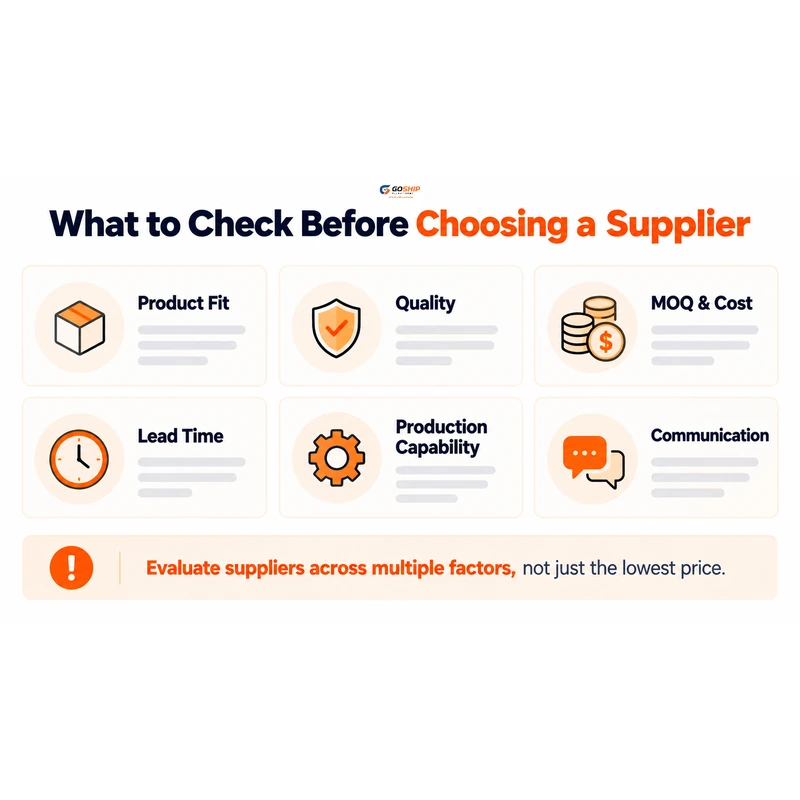
| Factor | What to Check |
| Product | Does it match your specifications? |
| Quality | Can requirements be defined and checked? |
| MOQ | Does it fit your purchasing plan? |
| Cost | What is included in the quotation? |
| Lead time | Can it work with your inventory plan? |
| Capability | Can the supplier handle your expected requirements? |
| Communication | Are responses clear and consistent? |
| Samples | Can you review the product before a larger order? |
Do not expect one supplier to score best in every category.
A slightly higher product price, for example, may be reasonable if another option creates problems elsewhere. The goal is to compare the complete sourcing arrangement rather than one number.
What Happens After Product Sourcing?
Choosing a supplier and confirming an order is not always the end of the product journey.
Depending on your business model, the next stages may include agreed quality checks, packaging preparation, inventory planning and order fulfillment.
You do not need to solve every stage while searching for suppliers, but thinking about what happens next can prevent sourcing decisions that create problems later.
For example, packaging requirements are easier to discuss before an order is completed than after inventory has already been produced.
GoShipFulfil’s current workflow similarly connects sourcing with agreed quality checks, packaging and shipment preparation, while treating these as later parts of the ecommerce supply-chain process. GOSHIP
FAQ
Can small ecommerce businesses use product sourcing services?
Yes. Product sourcing services can be useful for businesses of different sizes, especially sellers that do not have the time or resources to search for and communicate with multiple suppliers directly.
Is product sourcing the same as dropshipping?
No. Product sourcing is the process of finding products and suppliers, while dropshipping is a fulfillment model where products are shipped to customers without the seller holding inventory.
Sourcing can be part of a dropshipping business, but it is also used by ecommerce sellers that purchase inventory in bulk.
Can product sourcing include custom packaging or private labeling?
Yes, depending on the product and supplier. Sourcing can include finding suppliers that support custom packaging, labels, logos, or other branding requirements.If customization is part of your plan, include those requirements early in the sourcing process so suitable supplier options can be identified from the start.