
Imagine ordering 500 units of a product, expecting them to sell within a month. Three months later, half of them are still sitting in the warehouse. Even though those products haven’t generated any sales, you’re still paying to store them.
Storage costs are the expenses of keeping inventory in a warehouse before it is sold and shipped. How much you pay depends on the space your products occupy, how long they stay in storage, the number of SKUs, and the warehouse location.
Unlike product costs and shipping fees, storage expenses can build up quietly over time. Having more inventory doesn’t always mean making more sales.
So, what affects warehouse storage fees, and how can sellers keep them under control?
What Are Storage Costs in Ecommerce?
Before looking at ways to reduce storage costs, it helps to understand what you’re actually paying for.
Warehouse space is one of the main expenses, but it’s not the only one. According to CBRE, the average net asking rent for U.S. industrial and logistics space reached $11.16 per square foot in Q3 2026, up 3.6% year over year. Although warehouse rents differ from 3PL storage fees, these figures provide some context for warehouse operating costs.
For ecommerce sellers, common storage-related expenses include:
- Warehouse space rental or storage fees
- Additional inventory management fees, where applicable
- Fees for special storage conditions, such as temperature-controlled storage
- Long-term storage charges
If you work with a third-party logistics (3PL) provider, storage fees are often charged separately from other fulfillment services.
For example, a provider may charge you for receiving incoming products, storing inventory, picking and packing orders, and shipping packages to customers.
These charges may appear as separate items on your fulfillment invoice.
What Factors Affect Storage Costs?
Even when two ecommerce stores use the same warehouse, their storage bills can look very different. Here are four key factors that explain why.
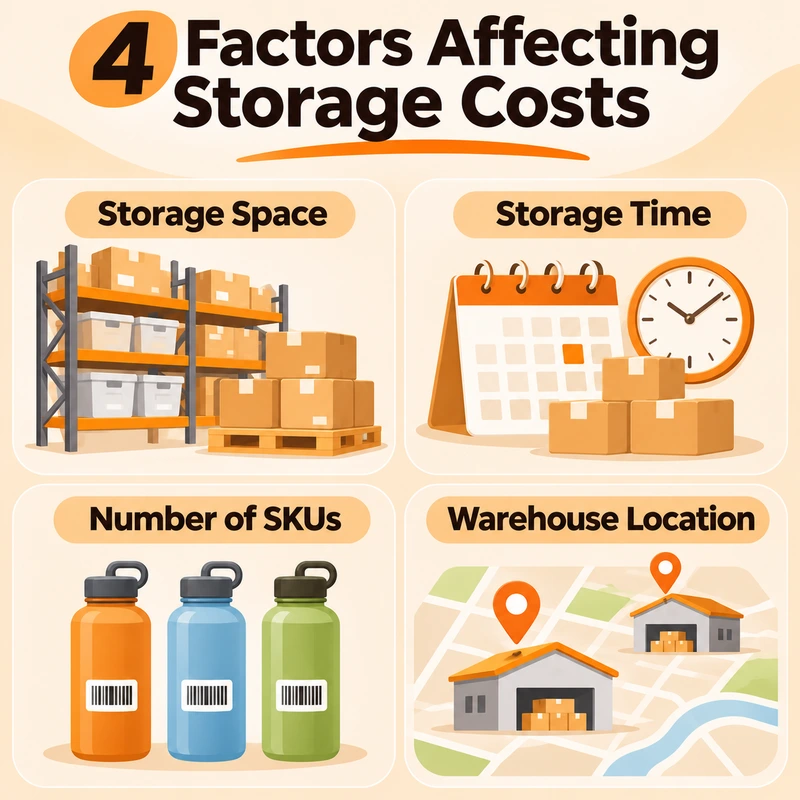
1. Inventory Size and Storage Space
One of the biggest factors affecting storage costs is how much warehouse space your products take up.
Depending on the size and quantity of your products, warehouses typically offer different storage options:
- Bins: Ideal for small products and individual items.
- Shelves: Useful for products that need to be organized and easily accessed.
- Pallets: Suitable for larger quantities of boxed or bulk inventory.
For example, small skincare bottles may only need a storage bin, while several cartons of household products may require pallet storage.
2. How Long Products Stay in Storage
Space isn’t the only thing you’re paying for. Time matters too.
A product that sells within a week may cost less to store than one that sits in a warehouse for several months.
Some 3PL providers charge for a full month of storage, while others calculate fees based on daily storage usage.
With daily prorated billing, for example, you may only pay for the days you use the storage space.
For example, with daily prorated billing, you may only pay for the days you use the storage space instead of paying for a full month.
Some providers also charge extra for inventory that stays in the warehouse beyond a certain period. These are known as long-term storage fees.
3. Number of SKUs
The number of product variations you sell can also affect storage costs.
A stock keeping unit (SKU) is a unique code used to identify and track a specific product or product variation.
For example, if you sell the same water bottle in three different colors, you may have three separate SKUs.
As you add more product variations, your inventory may need more storage locations.
Some warehouses charge for each storage location used by a SKU, while others base their fees on the total space your products take up.
As a result, a store with many slow-selling product variations may pay more for storage than expected, even if it doesn’t hold much inventory overall.
4. Warehouse Location
Where you store your products can make a difference to both storage and shipping costs.
Warehouse rates vary from one location to another. Local rent, labor costs, and the availability of warehouse space all play a role.
A warehouse closer to your customers may charge higher storage fees but offer lower shipping costs or faster delivery. A cheaper location could have the opposite effect.
That’s why the cheapest warehouse isn’t always the most cost-effective option.
How Do 3PL Providers Calculate Storage Fees?
The next question is: how are these fees actually calculated?
Not all 3PL providers charge for storage in the same way. Here are some of the most common pricing models.
| Storage Method | How It Works | Suitable For |
| Per Bin | Charged for each bin used | Small products |
| Per Shelf | Charged for each shelf used | Small to medium-sized products |
| Per Pallet | Charged for each pallet position used | Bulk inventory |
| Per Cubic Foot | Based on the volume of space your inventory occupies | Products of different sizes |
| Per Unit or SKU | Based on the number of units or SKUs stored | Depends on the provider’s pricing model |
For a simple quantity-based pricing model, the basic storage fee can be calculated as follows:
Basic Storage Fee = Billable Storage Quantity × Storage Rate per Billing Period
Let’s take pallet storage as an example. Suppose a warehouse charges $25 per pallet position per month. If your inventory takes up eight pallet positions for a full month, your basic storage fee would be $200.
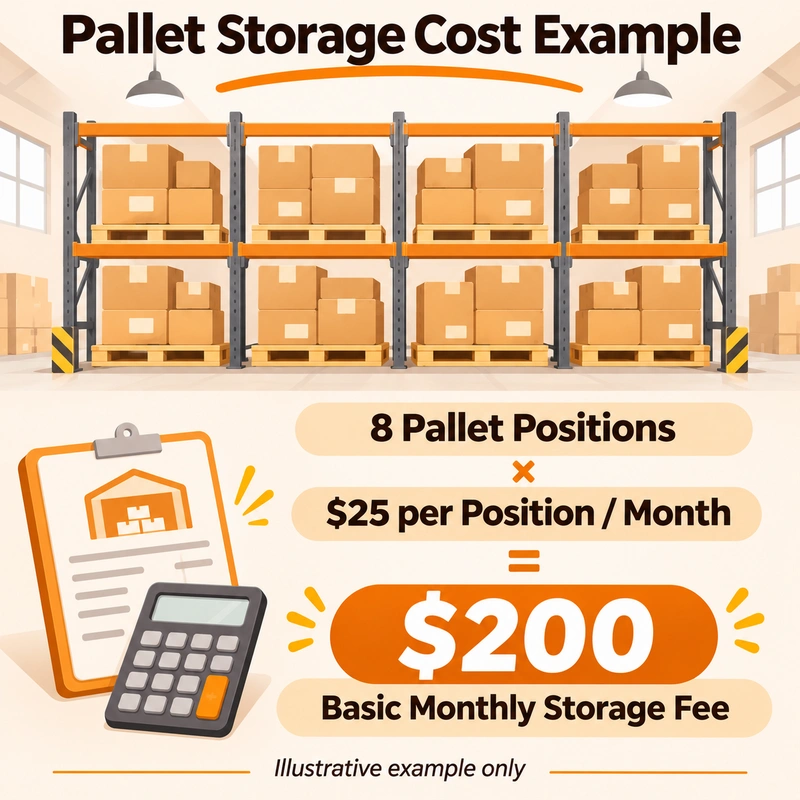
This basic storage fee may not include receiving, special handling, or long-term storage charges. Some providers also combine different pricing models, so check what’s included before comparing 3PL quotes.
Why Do Storage Costs Increase?
Even when your 3PL provider keeps its storage rates the same, your monthly bill can still go up.
Sometimes, the problem has less to do with warehouse pricing and more to do with how you manage your inventory.
Slow-Moving Inventory
A seasonal product may continue taking up warehouse space long after its peak selling period has passed.
Even if the remaining stock eventually sells, months of storage fees can eat into the profit you expected to make.
Overstocking
A lower purchase price can be tempting, especially when suppliers offer discounts for larger orders.
Buying 1,000 units instead of 300 might save you money on each product. But what happens if demand is lower than expected?
You could end up paying for extra warehouse space for months. At the same time, more of your cash is tied up in unsold inventory.
What looks like a saving at the purchasing stage may end up costing your business more in the long run.
Multiple Warehouse Locations
Storing products in multiple warehouses can help you reach customers faster, but it also means managing inventory across different locations.
Suppose you sell to customers in both the US and Europe. You might keep the same product in warehouses in both regions to shorten delivery times.
The challenge comes when demand is uneven. Products may sell quickly in one region while sitting unsold in another.
You could end up paying for extra storage in one warehouse while running low on stock in another.
In this case, the potential shipping savings need to be weighed against the additional storage costs.
How to Reduce Ecommerce Storage Costs
You can’t always control warehouse rates, but you do have some control over how much inventory you store and how long it stays there.
Here are four practical ways to reduce unnecessary storage costs.
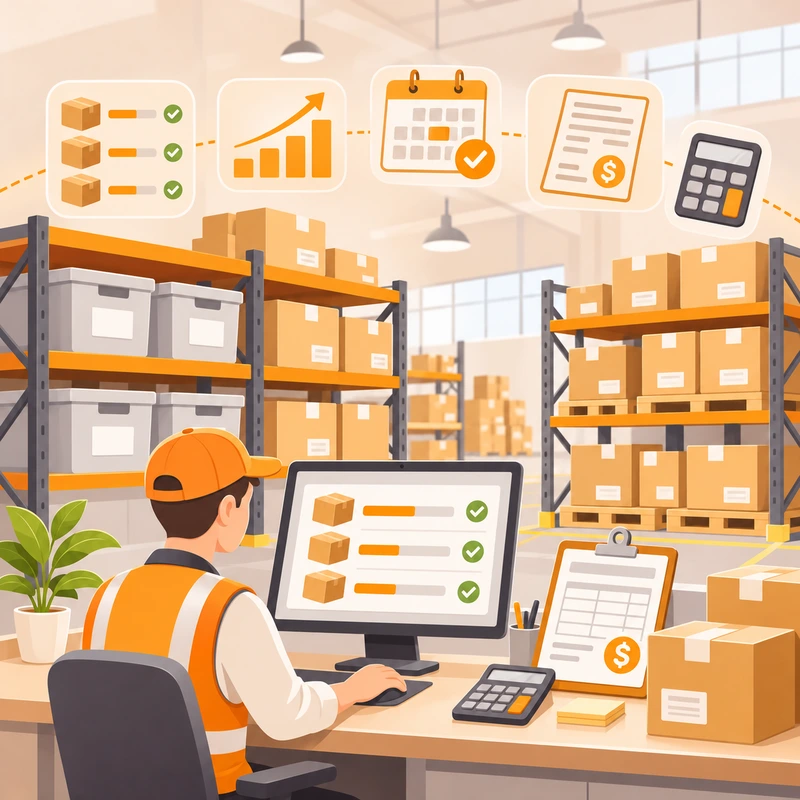
1. Monitor Inventory Movement
Regular inventory checks can help you spot slow-moving products before storage costs build up.
A few useful things to track include:
- Current stock levels
- Average monthly sales
- Inventory turnover rate
- Inventory age
If a product consistently sells below expectations, consider reducing future orders or running a promotion to clear excess stock.
2. Plan Purchasing Around Actual Demand
Use your sales history as a starting point when deciding how much inventory to order.
Take seasonal demand, supplier lead times, and upcoming promotions into account as well.
If you’re launching a new product, consider starting with a smaller order to test demand.
Once you have a better idea of how well the product sells, you can gradually increase your order quantities.
This helps you balance storage costs against the risk of running out of stock.
3. Review Your Storage Arrangement
The storage arrangement that worked six months ago may no longer suit your business today.
As stock levels fall or your product range changes, some storage locations may become partially empty.
Ask your fulfillment provider whether inventory can be consolidated into fewer storage locations. If you use multiple warehouses, review how much stock each location actually needs.
Making better use of your existing storage space may help lower costs without affecting order fulfillment.
4. Review Storage Fees Regularly
Make it a habit to check your storage invoices, even when your expenses seem reasonable.
Pay attention to:
- Changes in storage rates
- The number of storage locations you’re paying for
- Long-term storage surcharges
- Additional handling fees
- Billing periods and minimum charges
Compare these charges with your actual inventory levels.
If your stock levels have dropped but your storage bill hasn’t, it may be worth discussing your current storage arrangement with your fulfillment provider.
Final Thoughts
Lower storage costs shouldn’t come at the expense of product availability. A good storage strategy balances inventory expenses with customer demand.
When choosing a fulfillment partner, look beyond storage rates. Consider how warehousing, inventory management, and shipping work together to support your business.
If you’re unsure whether your current storage arrangement makes sense for your business, talk to GoShipFulfil about your inventory needs and fulfillment options.