
Imagine a product that costs $10 to source and sells for $40. On the surface, this looks like a very good business opportunity.
But what if shipping costs are high? What if customers can buy the same product for less elsewhere? What if returns take away most of your profit?
Finding high-margin dropshipping products isn’t just about picking cheap items and adding a bigger markup.
Products with high profit potential usually offer something customers are willing to pay more for. They stand out from similar products while keeping sourcing, shipping, and other operating costs manageable.
So, what makes certain products more profitable? And why do some product categories offer better opportunities than others?
What Makes a Dropshipping Product High-Margin?
Before we look at specific product categories, let’s see where profit comes from.
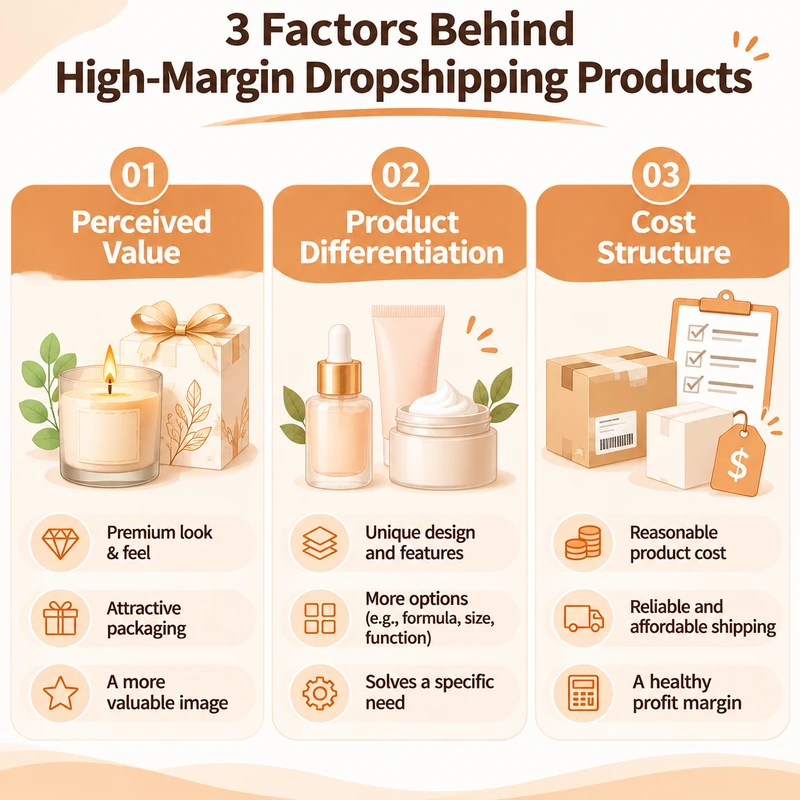
Three things matter.
Perceived Value
Perceived value is what customers think a product is worth. They judge this by its design, quality, usefulness, and the whole experience.
For example, two decorative candles may do the same job. But one has a more unique design, a carefully chosen scent, and premium packaging. Customers may pay more for that experience.
Product Differentiation
It’s easier to compete when your product offers something customers can’t find everywhere.
This could be a unique design or a useful mix of features. It could also be a specific target audience, or a more thoughtful presentation.
Cost Structure
A higher selling price doesn’t guarantee higher profit if your costs are too high.
Sourcing, packaging, shipping, advertising, and returns all take a share. They affect how much money is left from each sale.
In other words, a product needs two things. It needs a reason to sell at a higher price. It also needs costs low enough to support that price.
Why Some Product Categories Have Better Profit Potential
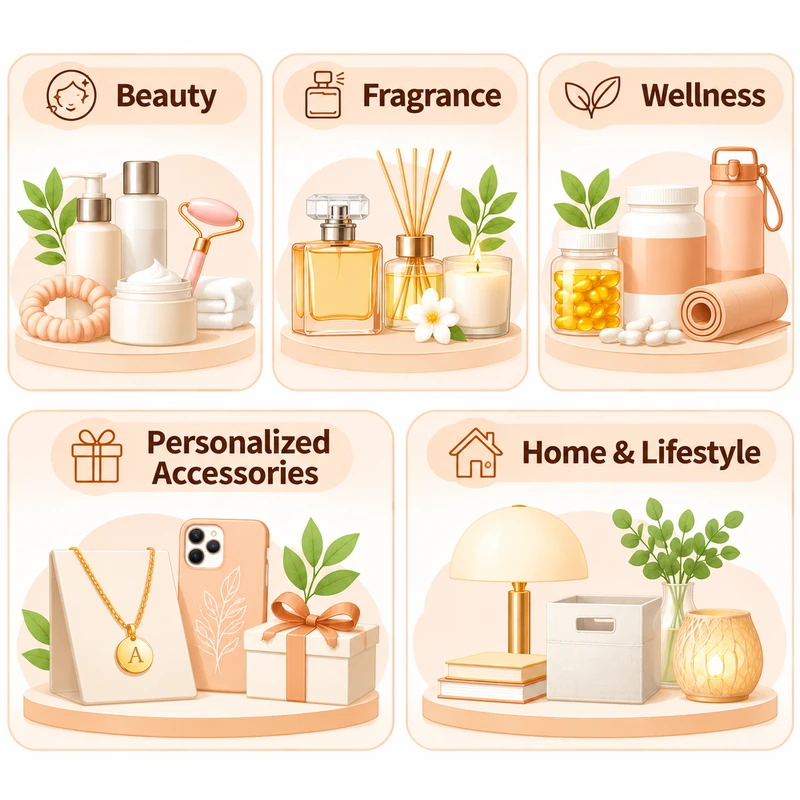
You now know what makes a product attractive from a profit perspective. But how does this apply to actual products?Some categories offer more opportunities to create value and stand out from competitors. Here are five worth exploring and the business reasons behind them.
1. Beauty and Personal Care Products
People often choose beauty products based on their own routines, preferences, and needs.
This gives brands many ways to stand out. Design, ingredients, packaging, and product sets can all change how customers see a product.
For example, a facial care tool can be sold as a basic single item. But a well-presented skincare accessory set can feel more complete.
The difference isn’t always the cost of materials. It’s how you position and present the product.
Beauty products also fit into everyday personal care routines. This is an advantage. A product that fits naturally into a routine may lead to repeat purchases. But this depends on the product and the customer.
Still, beauty products need extra care. Ingredients, product claims, and local market rules all matter.
2. Fragrance and Home Scent Products
Fragrance is an interesting category. Customers don’t just buy a physical product. They often buy a mood, an atmosphere, or an experience.
A home diffuser, for example, can be linked to relaxation. It can also be linked to interior design or everyday home routines.
The bottle design can change how customers see the product. So can the scent choices and the gift packaging.
This lets you stand out in ways beyond the basic function.
Fragrance products also suit seasonal collections and gift sets. A well-presented fragrance set can appeal to customers who want something more personal than a standard home accessory.
But packaging and shipping need careful thought. Glass bottles need good protection against breakage and leaks. Some fragrance products may also have shipping limits. This depends on the ingredients and how they are shipped.
These costs need to be counted when you set your selling price.
Thinking about selling fragrances online? Our guide to [perfume dropshipping] explains what to think about before you start.
3. Wellness Products
Wellness is another category worth exploring. It works best when products are made for a clear audience.
For example, some customers want products that fit into their daily fitness routines. Others are looking for general nutrition and personal care.
This lets you serve different customer groups. Each group gets products that match its own interests and needs.
Product sets can also add value. A collection of related wellness products may feel more complete to customers. Buying each item separately may not give that feeling.
There’s another reason this category is worth a look. Customers often care about what goes into the products they use. Ingredients, serving information, and product quality can all affect their buying decision.
For sellers, this is a chance to stand out. You can do it with clear product information, reliable quality, and a trustworthy brand.
But supplements and other regulated wellness products need extra care. Before you list a product, check the ingredients, the labeling, and the quality documents. Also check the local sales rules.
These rules can also affect your sourcing and operating costs.
4. Personalized Accessories
Personalization gives customers a reason to pick one product over another.
Take a simple necklace. A standard design faces a lot of price competition. A personalized one with a name, a date, or a special detail offers something more specific.
The added value comes from the personal touch. It doesn’t always come from expensive materials.
Other examples include custom phone accessories, engraved gifts, and personalized travel items.
Personalized products can also appeal to gift buyers. A product made for one person or one occasion can mean more than a standard item.
But there are some limits.
Custom orders may take more time to make. Personalized products are also harder to resell if a customer returns them.
The customization also has to be accurate. One small spelling mistake can make a good product useless as a gift.
5. Premium Home and Lifestyle Products
Home and lifestyle products give you ways to compete through design, materials, and function.
Take a storage product. It may look like dozens of others. But a better design can give customers a reason to choose it. So can stronger materials, or a more practical use of space.
The same goes for decorative lighting, home organization products, and some furniture accessories.
Coordinated collections are another chance. Products made for the same style or living space can feel more complete to customers.
Customers may like a matching collection more than a mix of unrelated items from different sellers.
But size and packaging matter. A large decorative item may cost more to ship than its price suggests.
The key is to offer a clear benefit. Don’t make fulfillment more complicated than it needs to be.
What Determines Whether a Product Is Actually Profitable?
These product categories offer different ways to create value and attract customers. But a product’s selling potential is only part of the picture. What really matters is how much money remains after the costs of each order are covered.
Let’s look at a simple example.
A product sells for $50. Its sourcing cost is $15, packaging and shipping cost $8, payment fees are $2, and advertising costs $10 per order.
| Cost Item | Amount |
| Selling price | $50 |
| Sourcing cost | $15 |
| Packaging and shipping | $8 |
| Payment fees | $2 |
| Advertising | $10 |
| Amount remaining | $15 |
This is an illustrative example based on the costs listed above.
The product leaves $15 after these order-related costs.
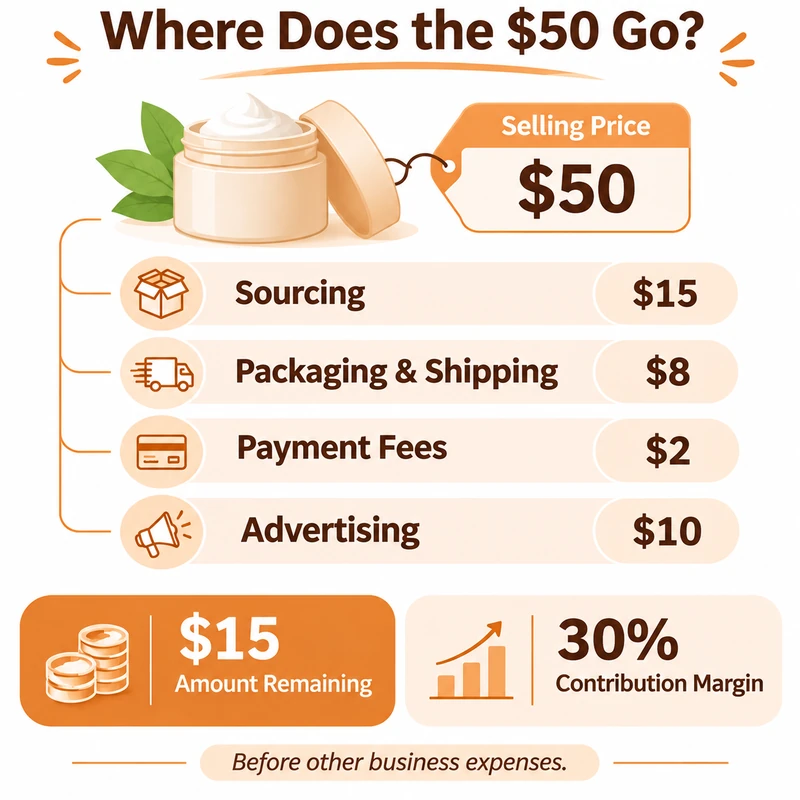
Its contribution margin is 30% at this stage.
This is not the same as the final net profit margin. Store subscriptions, taxes, refunds, and other operating expenses may reduce the amount further.
A useful way to look at product profitability is:
Contribution per Order = Selling Price − Variable Order Costs
The important point is that a product’s profit potential depends on more than its selling price or supplier cost.
It needs enough customer value to support its price, while leaving enough money after the costs of each order.
Final Thoughts
High-margin dropshipping products have a few things in common. Customers want them. They see value in them. The products stand out. And the costs stay manageable. A low sourcing price alone doesn’t make a product profitable.
Beauty, fragrance, wellness, personalized accessories, and premium home products each create value in a different way.
But no product category guarantees a high margin.
The real opportunity is in finding products customers will pay for. You also need a sourcing and fulfillment process that works over time.
Turning a promising product idea into a workable business also requires the right sourcing and fulfillment arrangements. If you’re exploring new product opportunities, GoShipFulfil can help you discuss product sourcing, packaging, and fulfillment requirements.