
An order comes in. You check the details, confirm the stock, arrange shipping, and send the tracking number.
Simple enough—until you’re handling dozens of orders, several suppliers, and customers in different countries.
Suddenly, a missing product variation or an outdated address can hold up an entire shipment.
These small issues can be signs that your fulfillment process is holding back your business. Once you know where things are going wrong, the next step is figuring out how to fix them.
Improving your order fulfillment process doesn’t always require expensive software or a bigger warehouse. Often, it starts with getting the everyday details right.
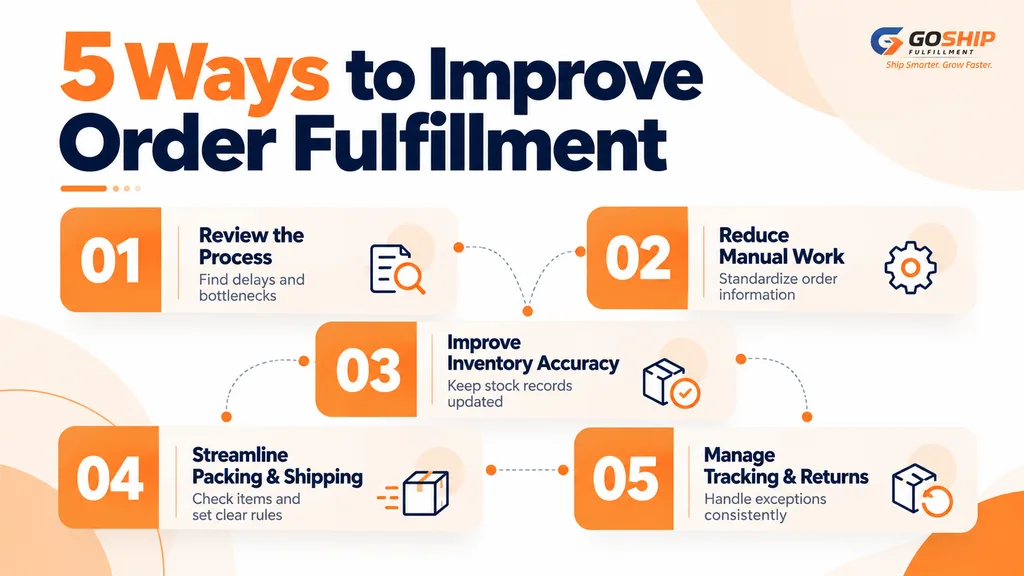
1. Review Your Current Order Fulfillment Process
Before making changes, follow a customer order from checkout to delivery.
Start by checking the main steps:
- Receiving the customer order
- Confirming inventory availability
- Picking and packing the products
- Arranging shipping and dispatch
- Providing tracking information and handling follow-up
If you use dropshipping, check which steps your supplier handles and which ones still require action from your store.
Next, look for delays between these steps.
Does someone need to manually forward order details? Are orders waiting for stock confirmation? How long does it take for customers to receive tracking information?
Review several recent orders, including at least one that was delayed or needed a correction. Note where each order slowed down and who was responsible for the next step.
A simple spreadsheet can help. Record the order date, processing status, dispatch date, and any problems that came up.
Look for problems that keep coming up, such as slow stock confirmation or orders waiting too long before dispatch. These are good places to start making changes.
2. Reduce Manual Order Processing
Every time someone copies order details from one place to another, there’s another opportunity for a mistake.
A customer orders two units, but the supplier receives a request for one. Or the shipping address is copied incorrectly.
Start by making sure every order follows the same format.
Each order should include:
- Order number
- Product SKU, variation, and quantity
- Customer name and shipping address
- Shipping method and any special handling instructions
If you work with a supplier, agree on how this information should be shared and who is responsible for checking it.
For Shopify and other ecommerce stores, order management tools can help transfer order details directly to a fulfillment system or supplier, reducing the need to enter the same information twice. The exact options depend on which systems you’re using.
But not every order can run automatically.
An incomplete address, an out-of-stock item, or a special packaging request may still need someone to step in.
Set up a way to flag these orders for review while allowing routine orders to move through the process without unnecessary manual steps.
3. Keep Inventory and Product Information Accurate
You can’t fulfill an order reliably if you’re unsure what’s available to ship.
Start by checking how your products and variations are listed.
Each variation should have its own SKU. If a T-shirt comes in three colors and four sizes, that’s twelve variations. Giving each one a unique SKU makes it easier to identify the correct item when an order comes in.
Next, make sure your stock records match what’s actually available.
If you hold inventory, keep track of incoming stock, orders, returns, and replenishment. Regular stock checks can help you catch differences between your records and what’s on the shelves.
For dropshipping sellers, inventory accuracy depends largely on supplier updates. Find out how often your supplier updates stock availability and how you’ll be notified when something runs out.
If your store continues accepting orders for unavailable products, you may end up dealing with delays or cancellations.
For products you stock yourself, set a reorder point so you know when to replenish.
For example, if you sell an average of five units per day and restocking takes ten days, you’d expect to sell around 50 units while waiting for new stock. With another 20 units set aside as safety stock, your reorder point would be 70 units.
The exact number depends on your sales and supplier lead times, but the goal is simple: order more stock before you run out.
4. Improve Picking, Packing, and Shipping Coordination
Once an order is confirmed, clear picking, packing, and shipping instructions can help prevent mistakes and unnecessary delays.
Check the Right Products Before Packing
Orders with multiple products, sizes, or colors leave more room for picking errors.
Use picking lists that include the SKU, product variation, and quantity rather than relying on product names alone.
Before sealing a parcel, check that the items match the order. This is especially useful for products with similar packaging or variations that are easy to confuse.
If you work with a fulfillment provider, ask how orders are checked before packing and what happens when an item is missing or incorrect.
Set Clear Packaging Requirements
Packaging needs to protect the product without adding unnecessary size or weight.
Fragile items may need extra protection, while smaller, durable products can often use simpler packaging. Oversized boxes may also increase shipping costs when carriers calculate charges using dimensional weight.
If you offer branded packaging, thank-you cards, or product bundles, prepare clear packing instructions in advance.
For example, specify which box to use, whether an insert should be included, and how bundled items should be packed together.
Share these requirements with your supplier or fulfillment partner before orders start coming in. Check whether custom packaging involves additional fees or minimum quantities.
Choose Shipping Options Based on the Order
The cheapest shipping method isn’t always the most practical choice.
Compare shipping options based on the destination, parcel size and weight, estimated delivery time, and total cost.
For international orders, check applicable product restrictions and customs requirements before offering a shipping option to customers.
You can also set basic shipping rules for common situations. For example, fragile products may require additional handling, while certain destinations may have fewer available delivery services.
Having these requirements agreed on in advance can reduce the number of shipping decisions that need to be made for each order.
5. Make Tracking and Returns Easier to Manage
Fulfillment doesn’t end when a parcel leaves the warehouse.
Customers still want to know where their orders are and what happens if something goes wrong.
Start by making sure tracking information is available as soon as an order ships.
Where supported, tracking numbers and delivery updates can be synced automatically with your store. Otherwise, set a routine for recording and sharing this information so your team can check an order’s status without contacting the supplier each time.
Next, decide who handles delivery problems.
For example, establish who will contact the carrier when tracking stops updating, request an address correction when possible, or investigate a damaged parcel.
If you work with a supplier or fulfillment provider, agree on these responsibilities before problems occur.
Returns need a clear process, too.
Confirm where customers should send returned items, who checks their condition, and how refund or replacement requests are handled.
For dropshipping sellers, it’s especially important to understand your supplier’s return arrangements before offering customers a return option.
If you hold inventory, inspect returned products before making them available for sale again. Some items may be damaged, opened, or unsuitable for resale.
Final Thoughts
Improving your order fulfillment process starts with understanding where orders slow down or mistakes happen.
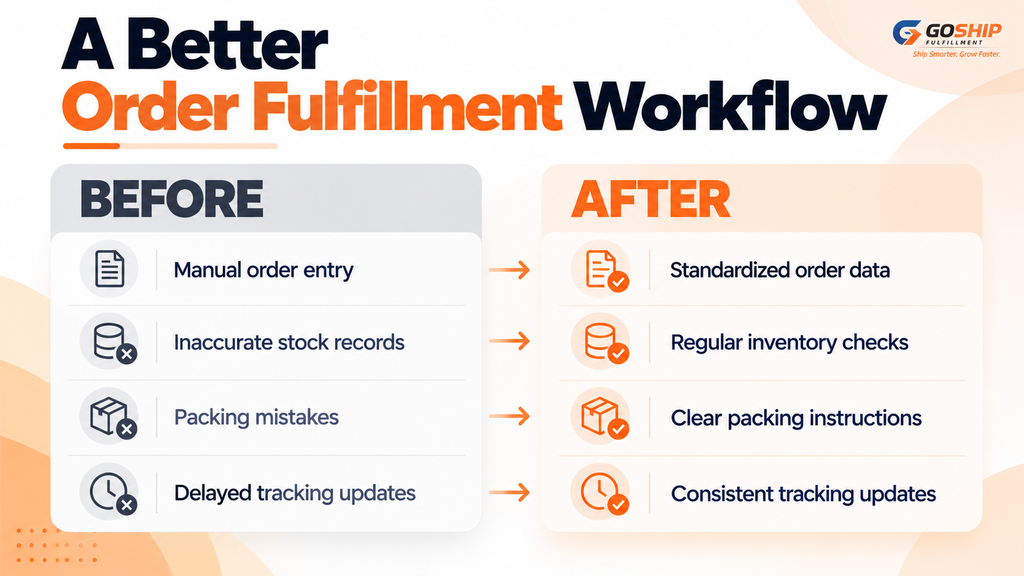
You don’t need to change everything at once. Start with the issues that occur most often, whether that’s manual order entry, inaccurate inventory records, packing errors, or delayed tracking updates.
As your store grows, keeping these steps organized can become more demanding. If you need support with sourcing, packaging, or order fulfillment coordination, GoShipFulfil can help you explore a workflow that fits your business.